





How to Write a Business Plan One-Pager (+Templates)
Learn how to create a one-page business plan, with tips on what to include in a business plan one-pager and the best format, plus customizable templates.
Set as Preferred Source
A business plan one-pager is created by entrepreneurs, startups, and small business owners who need a concise, high-impact way to present their business.
The goal of a business plan one-pager is to give investors, lenders, and partners a quick overview before they review a full business plan, which helps secure interest and funding efficiently.
Before writing a business plan one-pager, gather key assets like market research, financial projections, competitor analysis, and your full business plan (if available).
Having a clear value proposition, target audience insights, and funding needs ensures your one-pager is focused, persuasive, and ready to capture investor interest quickly.
Compared with traditional multi-page business plans, a one-pager has several significant benefits:
- It’s concise and to the point. This makes it easier for investors and partners to quickly understand your vision.
- A one-page business plan has limited space. This forces you to highlight only the most critical aspects, making your case clearer and more compelling.
- It’s easier to share. Because it’s just one page, it’s more likely to be read, forwarded, and discussed.
- It speeds up decision-making. Investors and stakeholders can assess your business quickly without sifting through pages of details.
- It keeps you focused. Summarizing your plan on one page helps you refine your strategy and avoid unnecessary complexity.
- It’s adaptable. You can easily tweak and update it as your business evolves without rewriting an entire document.
Probably not. Your business plan one-pager is not meant to replace a full business plan, but rather to supplement it.
While your one-pager provides a high-level overview of your business idea, it may not provide the level of detail some investors or partners require.
You can use a business plan one-pager as a way to test your business idea and get feedback before investing time and resources in creating a full-scale business plan.
What does a one-page business plan look like?
Traditionally, a one-page business plan was a dense PDF or PowerPoint slide, forcing you to pinch and zoom just to read it. This made key details easy to miss and hard to retain.
That’s why companies are shifting to interactive formats, turning business plans into scrollable, engaging documents.
You’re no longer stuck cramming everything onto one page – you can add data visualizations, multimedia, and even embed supporting documents.
Breaking up dense text into smaller, readable chunks makes your plan easier to digest and more engaging, so your audience actually reads, understands, and remembers it.
Here’s an example of an interactive business plan one-pager:

Scroll to preview
How to write a business plan one-pager?
Writing a one-page business plan might sound easy – it’s just one page, after all. But the real challenge is knowing what to include and what to save for later.
Below, I’ll break it down slide by slide, with examples to make the whole process smoother.
What to include in a business plan one-pager
- Title slide
- Introduction
- The problem you are solving
- Target market and opportunity
- Main objectives and success metrics
- The solution you offer
- Unique value proposition (UVP)
- Marketing and sales plan
- Key team members
- Financial summary
- Social proof
- Next steps (small concession)
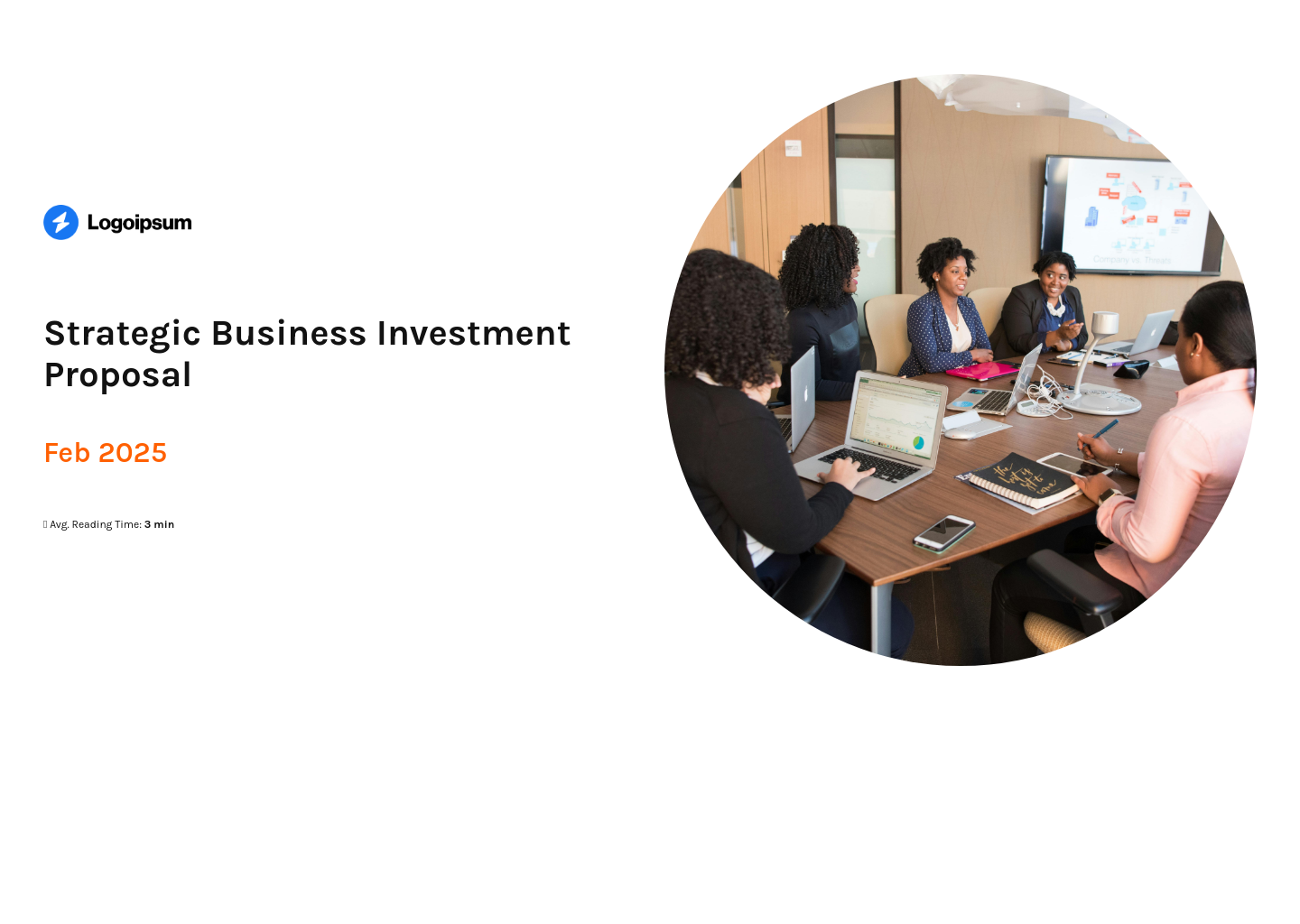
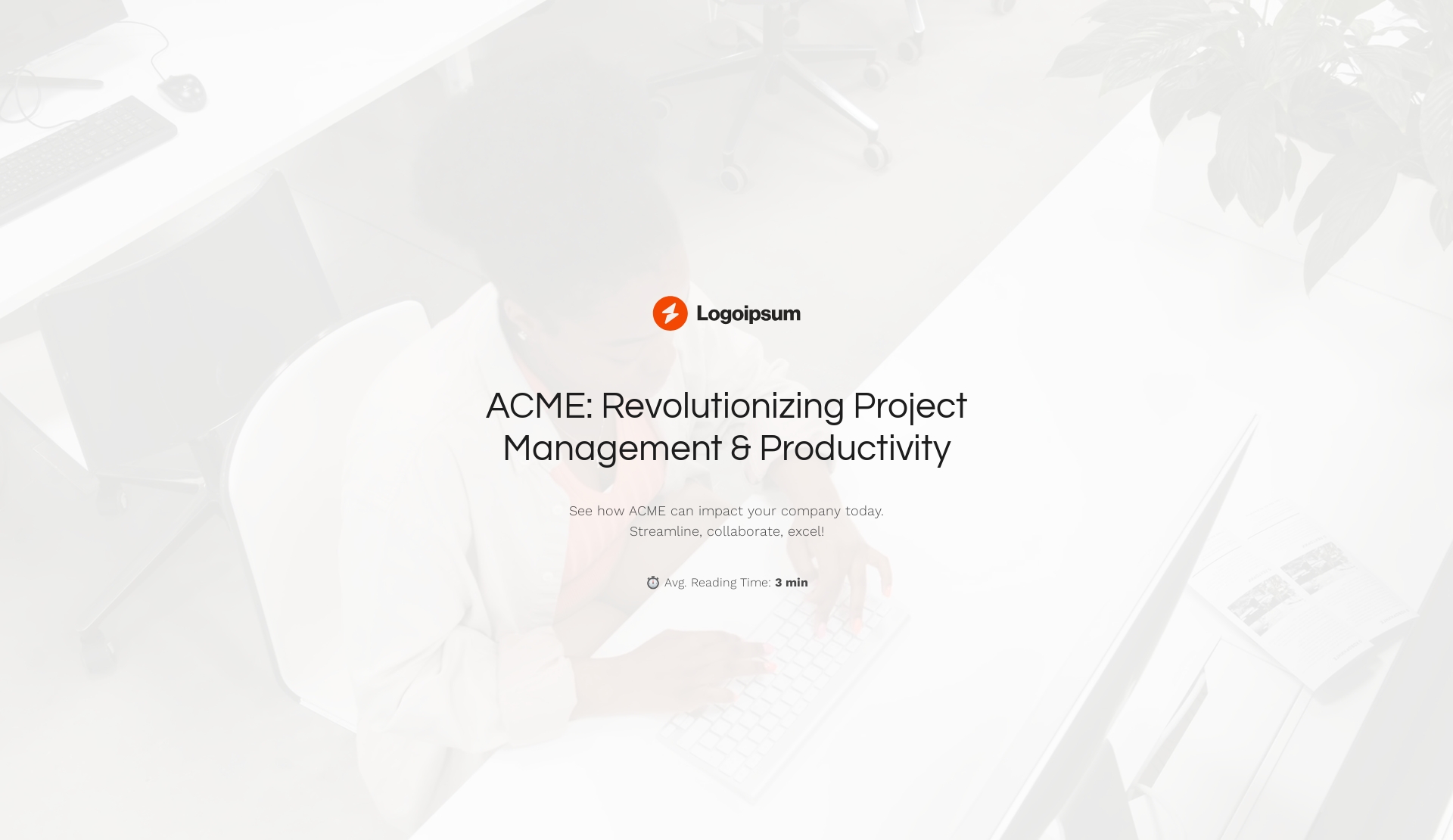
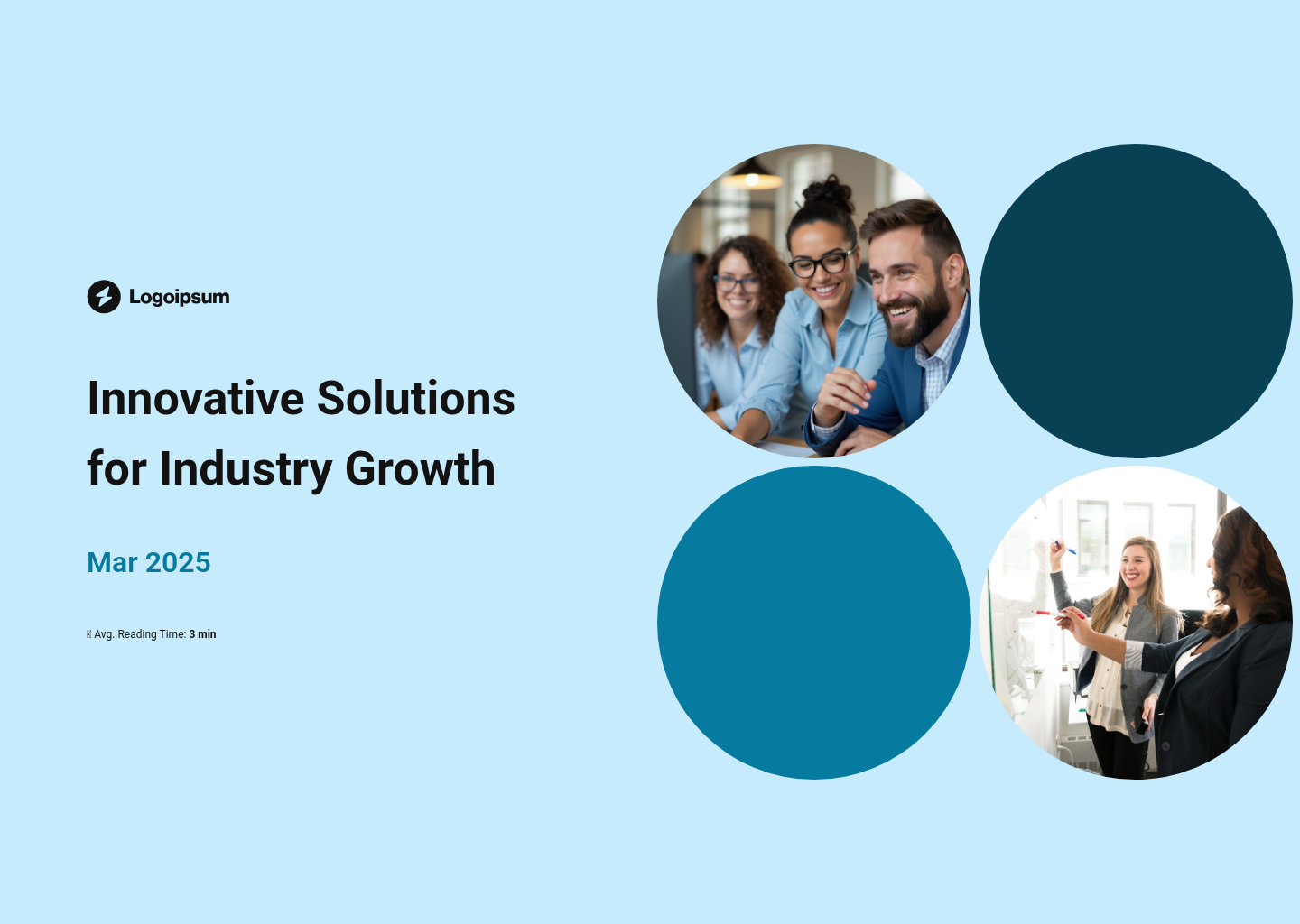
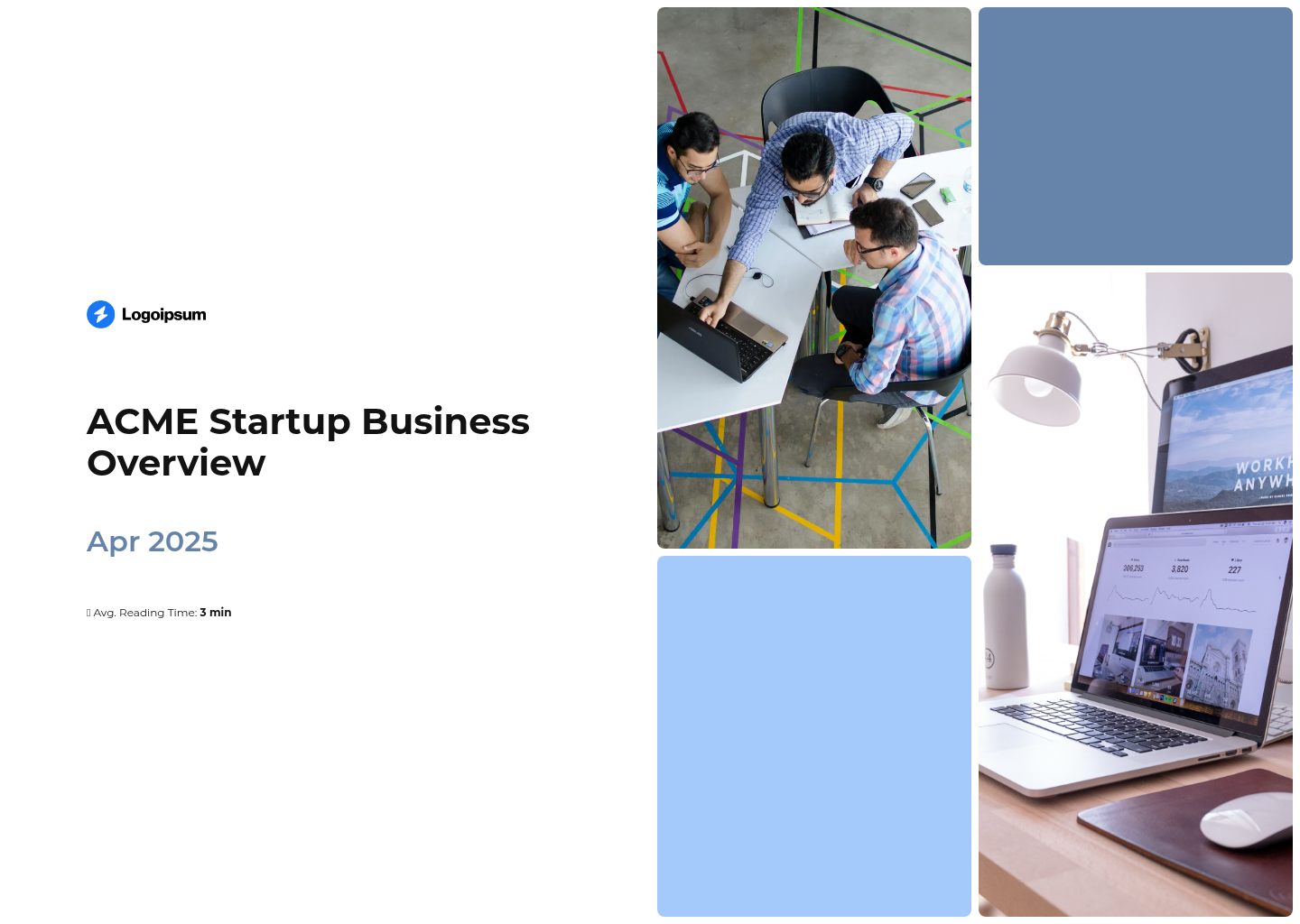
1) Title slide
Your title slide is more than just a placeholder – it sets the tone for your entire business plan. Investors will decide in seconds whether they want to keep reading, so make sure this slide gives them a reason to.
A clean design, a strong one-liner, a company name, and a clear message help build credibility right away.
And if you really want to boost engagement, consider adding a short video – it can keep investors on your page longer and increase the chances they’ll take action.
- Add your company name and logo – Make it clear who you are and what you do from the start.
- Include a short video or animation – This can increase engagement by 32%, keep investors reading 37% longer, and boost conversions by 17%.
- Personalize with dynamic variables – If you’re sending it to multiple investors, adding their name can make it feel more tailored.
- Keep the design clean and professional – First impressions matter, so avoid clutter and stick to a polished look.
- Set expectations right from the start – You can also add the average reading time on the cover slide (right below your company name and logo). This simple little fix can shrink your bounce rate by 24%.

2) Introduction
Your company overview is where you tell investors the story behind your business
A strong overview gives investors confidence that you know your market, understand your strengths, and have a clear vision for success.
If you want to make it even more personal, consider adding a short note before this slide.
A simple, genuine message from you can go a long way in making investors feel like they’re hearing from a real person, not just another automated pitch.
- How it came to be – Share the inspiration or problem that led you to start the business.
- What it stands for – Highlight your mission, values, and what sets you apart.
- Where it’s headed – Give a glimpse of your vision, growth potential, or key goals.

3) The problem you are solving
Investors don’t just back great ideas – they back solutions to real, pressing problems.
This slide should clearly outline the pain points your target market faces and why they urgently need a solution.
The stronger the problem, the stronger the demand for what you’re offering. Make it relatable, data-backed if possible, and always framed from the customer’s perspective.
- Focus on the customer’s experience – Show the challenges they face and how it affects their lives or businesses.
- Quantify the problem – If possible, include stats on lost revenue, inefficiencies, or market demand to highlight the urgency.
- Use real-world examples – A relatable story or case study can make the issue feel more tangible.
- Leverage market research – If you have data proving this is a widespread issue, include it to reassure investors.
- Keep it sharp and compelling – Avoid over-explaining; the problem should be clear in seconds.

4) Target market and opportunity
Investors want to know that you’re not just guessing – your market analysis slide proves you’ve done your homework.
This is your chance to show a clear picture of your ideal customers, the market size, and the opportunities your business can tap into.
A strong market analysis not only builds confidence but also highlights why now is the right time to invest in your business.
- Define your customer segments – Who are they? What do they need? Why would they choose you?
- Show the market size – Investors want to see the potential – use stats to highlight demand.
- Map out the competition – Identify key players and what sets you apart from them.
- Spot gaps and opportunities – Show how your business fits into the market and why competitors haven’t solved this problem yet.
- Use real data – Market reports, industry trends, or customer insights can make your case even stronger.
5) Main objectives and key metrics
Your objectives and key metrics slide acts as a roadmap for your business, showing investors exactly how you define success.
Clear, measurable goals signal that you have a strategic plan and understand what it takes to grow.
More importantly, this is where you prove your business isn’t just an idea – it has real traction or strong potential for it.
- Define your key performance indicators (KPIs) – Show how you measure success in a way that investors can track.
- Highlight traction or potential traction – Metrics like revenue growth, customer acquisition rates, or user engagement can make your case stronger.
- Make data digestible – Use charts, infographics, or visuals to present key figures in a way that’s easy to grasp.
- Connect your objectives to market demand – Show how your goals align with industry trends and opportunities.
- Be specific but realistic – Investors appreciate ambitious targets, but they also want to see a plan grounded in reality.
6) The solution you offer
Your solution slide is the heart of your business plan one-pager – it’s where you show investors how your product or service transforms the problem you’ve outlined.
The best solutions don’t just fix pain points; they create a better world for your customers. Keep it simple, clear, and engaging, so investors instantly see the value you bring.
- Focus on benefits, not just features – Investors need to see how your solution improves customers’ lives or businesses.
- Use clear, simple language – Write as if you’re explaining it to a friend with no industry knowledge.
- Make it feel transformational – Choose words and visuals that build excitement and anticipation.
- Avoid jargon and acronyms – If investors have to decode what you’re saying, you’ll lose their attention.
- Consider adding animation or video – A short demo or motion graphic can quickly illustrate how your solution works and why it stands out.
7) Unique Value Proposition
Your Unique Value Proposition (UVP) is what makes your business stand out – it’s the reason customers will choose you over the competition.
This slide should sum up the essence of your company in a way that’s clear, memorable, and inspiring.
A strong UVP captures investors’ attention and makes them eager to learn more, so keep it snappy and impactful.
- Keep it short and impactful – A single, powerful sentence is more effective than a long explanation.
- Show what makes you different – Focus on the unique advantage you bring to the market.
- Use inspiring language – A strong UVP should excite investors and customers alike.
- Consider a tagline or vision statement – Something as simple as “Transforming the future of sustainable energy” or “Innovating personalized healthcare solutions.” can capture your essence.
- Make it easy to remember – If an investor can recall your UVP later, you’ve done it right.

8) Marketing and sales plan
Your marketing and sales plan is where you prove to investors that you have a clear, strategic path to turning interest into revenue.
It’s not enough to have a great product – you need a plan to get it in front of the right people and convince them to buy.
This slide should give a snapshot of your approach, from pricing and promotion to distribution channels and customer acquisition.
- Define your customer acquisition strategy – How will you attract and convert your target audience?
- Highlight key distribution channels – Will you sell directly, through partnerships, or via online platforms?
- Outline your pricing strategy – Show how your pricing aligns with market demand and profitability.
- Showcase your promotional tactics – Whether it’s paid ads, social media, or referrals, highlight how you’ll generate interest.
- Keep it results-driven – Focus on strategies with measurable outcomes to reassure investors.
The slide below is a placeholder that you can easily swap out for the sections you want to include.
9) Key team members
Investors look beyond the business idea – they want to see a team that has what it takes to bring the business to life and drive its success.
Show that your team brings a diversity of thought, a wealth of experience, and a passion for the business that can inspire investors and make them fall for your team even more than they fall for your business idea.
Including corporate headshots and short bios adds a personal touch and helps investors connect with your story.

10) Financial summary
Numbers matter—especially to investors. Your financial summary should give a clear picture of your projected revenue, expenses, and profitability.
Whether it’s a sales forecast, profit and loss analysis, or cash flow projection, this slide should reassure investors that your business has a solid financial foundation and a path to growth.
It’s also a good idea to pair this with a Use of Funds breakdown.
If you’re asking for funding, be clear about how much you need and exactly how you’ll spend it. This helps investors see where their money is going and how it will drive business success.
- Break down key projections – Sales forecasts, profit and loss, and cash flow estimates give investors a clear picture of growth potential.
- Outline your funding needs – Be specific about how much you’re raising and why.
- Show exactly where the money goes – Whether it’s product development, hiring, or marketing, detail how funds will be allocated.
- Support your ask with data – Use past performance, industry benchmarks, or market research to back up your projections.
- Highlight ROI – Make it clear how investor funding will help scale the business and generate returns.

11) Social proof
Investors need to trust that your business has real potential before they fund it, and social proof is one of the best ways to build that trust.
Whether it’s customer testimonials, case studies, press mentions, or industry awards, this slide helps prove that your business is gaining traction.
If you’re just starting and don’t have customers or awards yet, you can still highlight endorsements from industry experts, early pilot results, or partnerships that validate your idea.
- Customer testimonials – Real feedback can reinforce the value of your product or service.
- Case studies – Show how your business has already delivered results, even in a small test phase.
- Press mentions or awards – If your business has been recognized, highlight it here.
- Industry partnerships – Collaborations with credible companies or experts add legitimacy.
- If you’re pre-launch, focus on validation – Early interest, waiting lists, or expert endorsements can be just as powerful.

12) Next steps
Don’t end with a thank-you slide! Instead, end your business plan one-pager by providing a clear and actionable call-to-action.
This slide should leave no doubt in investors’ minds about what you want them to do next and how they can get involved in your business.
By providing a compelling call-to-action, you can increase the likelihood of securing funding and gaining valuable support for your business.
Our research shows that decks with a clear, singular next step have a 27% higher conversion rate than those which end with a generic “thank you” slide.
- Scheduling a meeting to discuss the plan in more detail
- Scheduling a live demo of the product
- Downloading additional materials (market research, positioning, marketing plan, user research, product technical documentation, etc.)
- Signing a letter of intent
- Making an investment (mostly good for small donations/investments)
Create your business plan from a template
Creating a one-sheet business plan that will cut above the noise and get results takes serious effort.
And if it’s poorly structured or unclear, you risk losing investor interest before they even see your vision.
To save time and make sure you get it right, try using interactive business plan one-pager templates. This way, you can focus on telling your story while we handle the design and structure.
Just grab one.

