




Nonprofit Storytelling Examples to Inspire Action
Learn the art of storytelling for nonprofits, charities, and NGOs. Get our best nonprofit storytelling examples, tips, and templates to write your own.
Set as Preferred Source
Fundraising for nonprofit organizations is often viewed as a daunting task, reserved for a select few who possess the magical touch to convince people to part with their hard-earned money.
However, what if we could democratize this process? What if fundraising could be a collective effort, driven by compelling stories of transformation?
In this blog post, we’ll explore a new model of fundraising that focuses on the transformative power of storytelling for nonprofits and charities and how you can be a part of this revolution.
What is nonprofit storytelling?
Nonprofit storytelling is about weaving a narrative that aligns with your mission and resonates with your audience. Unlike corporate storytelling, which often focuses on selling a product, nonprofit stories aim to inspire action and create change.
Your story should be a natural extension of your nonprofit’s mission and values.
Make sure that you know who you’re talking to and tailor your story to resonate with your target audience.
- Always start with your mission statement when crafting a story.
- Use language that your audience understands and relates to.
What types of stories can nonprofits tell?
Stories can be used in almost any facet of a charity or nonprofit organization. From eliciting donations to enlisting motivating volunteers or motivating staff. Storytelling is a powerful tool that influences opinions and generates motivation.
Here are the main types of stories you can use:
1) Impact stories
Impact stories are the crown jewels of nonprofit storytelling. They show the tangible results of your work and inspire others to join your cause.
Impact stories are your most potent weapon in showing the direct effects of your organization.
For example, if you run an educational nonprofit, sharing a story about a student who went from failing grades to academic excellence can be incredibly powerful.
- Show the before and after transformation that has occurred because of your nonprofit.
- Use metrics to show the impact, such as “increased pass rates by 40%.”
- Include direct quotes from beneficiaries to add a layer of authenticity.
Here’s how to write great impact stories:

2) Founder stories
Founder stories offer a behind-the-scenes look at the origins of your nonprofit, providing a human element that can be incredibly inspiring.
Founder stories give your audience a glimpse into the passion and vision that birthed your organization. Take Kiva for instance.
The story of how Jessica Jackley and Matt Flannery started Kiva is a compelling narrative that adds depth and credibility to the organization.
- Explain what drove the founder(s) to start the nonprofit.
- Every founder has faced obstacles; share their challenges and triumphs.
- Use the founder’s story to inspire new volunteers or team members during onboarding.
- Feature this narrative prominently on your “About Us” page.
Here’s another great example of a founder story:
3) Beneficiary stories
Beneficiary stories serve as testimonials that show your nonprofit’s work in action, providing social proof that what you’re doing is making a difference.
For example, if you’re a nonprofit focused on mental health, sharing a story about someone who battled depression and came out stronger can be incredibly impactful.
It not only shows the effectiveness of your programs but also destigmatizes mental health issues.
- Use firsthand accounts like testimonials or interviews to make the story authentic.
- Use photos or videos to add a layer of emotional impact.
- Share your stories and videos on social media.
- Include these stories in your newsletters to keep your community engaged.
4) Donor stories
Donor stories can serve as powerful testimonials, showing potential supporters that people like them are supporting your cause.
For example, a monthly donor to Doctors Without Borders could share why they chose to support the organization, serving as a compelling endorsement for potential donors.
- Use donor stories as social proof to validate your nonprofit’s work.
- Use these stories to help build a community around your cause.
- Feature donor stories in your nonprofit annual reports to add a personal touch.
- Use these narratives in your email marketing campaigns to inspire potential donors.
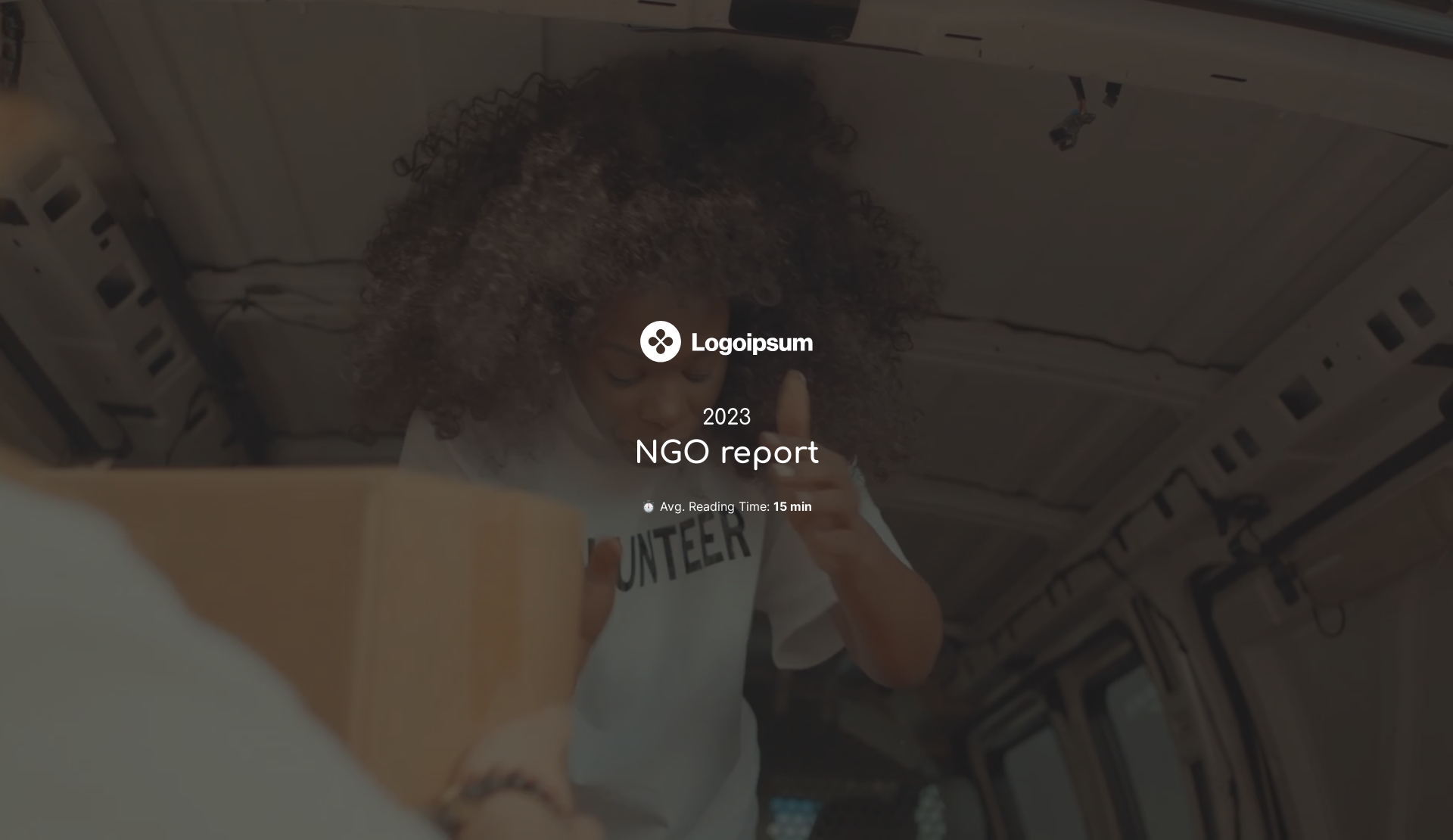
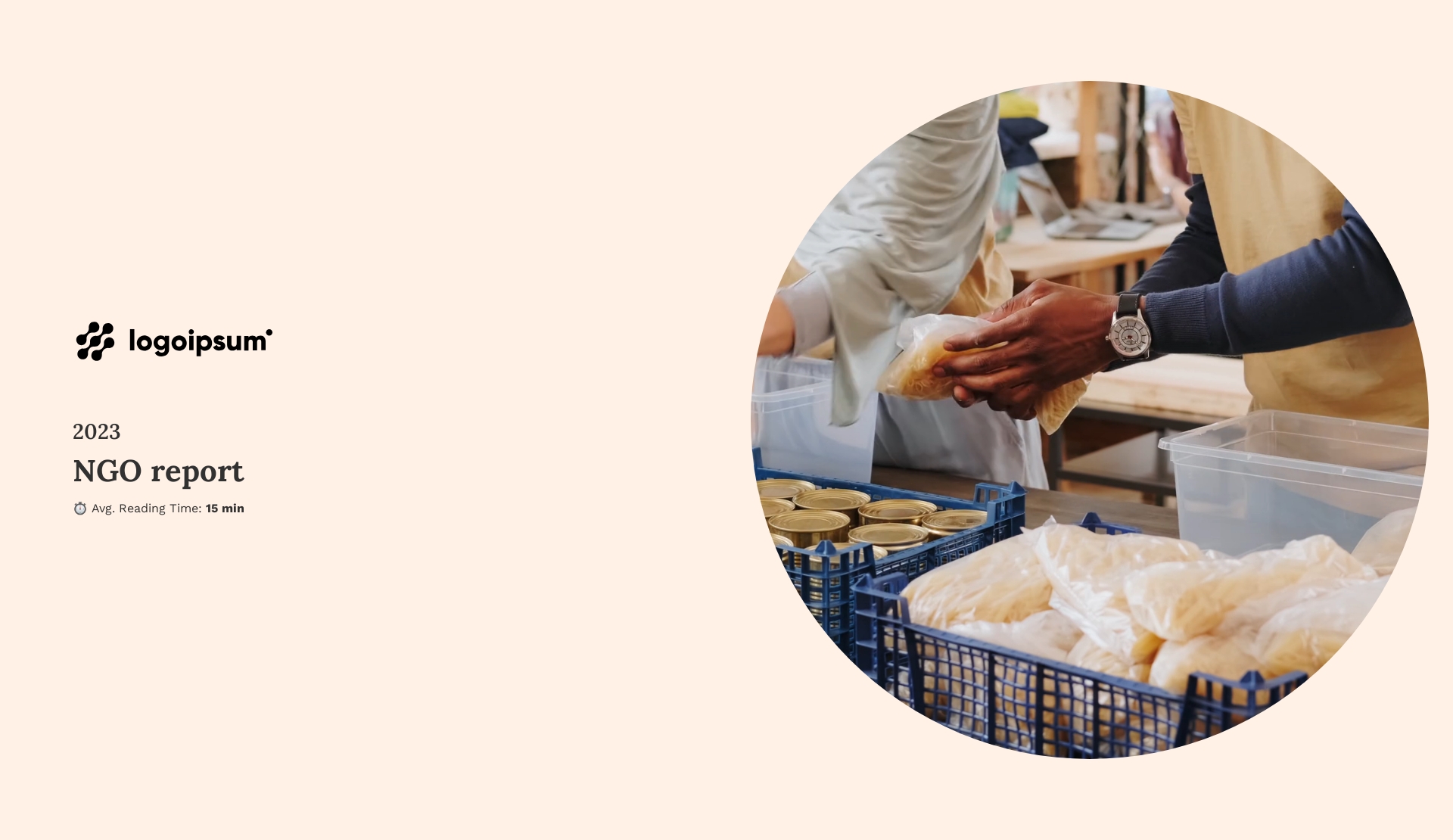
Here’s an example of an annual report designed for storytelling:

Scroll to preview
5) Origin stories
Origin stories delve into the roots of your nonprofit, explaining why it was founded and what gap it aims to fill. These stories can be incredibly motivating, giving both your team and your audience a sense of purpose and direction.
- Use archival photos or documents to add authenticity.
- Include quotes from founders or early members to capture the original spirit.
6) Community stories
Community stories put a face on the people your nonprofit serves, making them relatable to your audience. These stories can be powerful tools for building empathy and understanding, which are crucial for donor engagement.
- Use real-life testimonials in text or video to add credibility.
- Include before and after scenarios to show impact.
Here’s a short video on how to ask your community for stories:

7) Behind-the-scenes stories
These stories offer a window into the daily operations of your nonprofit, from the challenges your team faces to the small victories that keep everyone motivated. They humanize your organization and make your work more transparent.
- Share snippets of team meetings or planning sessions.
- Highlight a “team member of the month” and their contributions.
8) User-generated stories
User-generated stories are firsthand accounts from those directly impacted by your work. These stories are particularly compelling because they come from the community you serve, adding an extra layer of authenticity.
- Encourage community members to share their stories on social media.
- Use a specific hashtag to collect these stories for easy tracking and sharing.
How do you craft a compelling story?
Writing a good story takes talent, but more than anything it takes a keen eye and an attentive ear for a good real-life story to take and bring to the public. Once that’s done, there are some basic best practices to ensure.
1) Narrative structure
Crafting a compelling story isn’t just about what you say, but how you say it. A well-structured narrative can make all the difference.
A good story has a clear beginning, middle, and end. It introduces the characters, sets the scene, presents a problem, and then offers a resolution. This structure is not just for fairy tales; it’s a powerful framework for any story, including those for nonprofits.
Key concepts:
- The hero’s journey: This classic narrative structure can serve as a blueprint for your stories. But take note to always focus on the beneficiary as the hero of the story, not your organization.
- Conflict and resolution: Introduce a problem and show how your nonprofit provides a solution.
Here’s our recommended presentation structure:

2) Voice and tone
The voice and tone you choose can make or break your story. It’s crucial to get it right to resonate with your audience.
Your voice should be an extension of your nonprofit’s brand personality, while the tone should adapt based on the content and context.
For example, if your nonprofit deals with serious issues like domestic violence, your tone should be respectful and somber, not upbeat and casual.
Key concepts:
- Brand consistency: Your voice should be consistent across all platforms and mediums.
- Contextual adaptability: Your tone can change depending on the situation, but it should always align with your brand’s voice.
- Style guide: Create a style guide that outlines the voice and tone suitable for your nonprofit. Train your team, especially those handling social media or content creation, to maintain this consistent voice and tone.
3) Emotional appeal
The emotional component of your story is its heartbeat. It’s what turns passive listeners into active supporters.
Connecting on an emotional level can make your story unforgettable. For example, using first-person accounts can make the narrative more relatable and impactful.
Key concepts:
- Empathy: Your story should aim to evoke empathy from your audience. Use emotive language to connect with the reader but avoid being overly sentimental.
- Relatability: Use real-life situations that your audience can relate to. Include real-life anecdotes to make the story more relatable.
The new model of fundraising for nonprofits: Transformational storytelling
Fundraising for nonprofit doesn’t have to be a task left to the “elite fundraisers.” By shifting the focus from needs and services to transformation, we can all become ambassadors for the nonprofits we love.
So let’s start a revolution in how we think about and approach fundraising. After all, transformation is not just the work of nonprofits; it’s a collective effort that we can all contribute to.
Would you consider making a gift to help someone experience a life-changing transformation?
If your answer is yes, then you’re already a part of the revolution. Thank you for taking the time to read this post, and let’s make a difference, one transformation at a time.
The traditional nonprofit model: Where we go wrong
Traditionally, nonprofits have been excellent at communicating what they need—money, volunteer time, and talents. They are also good at describing the programs and services they offer.
But where many organizations falter is in connecting these elements to the transformative impact they have on individual lives and the community at large.
Let’s consider 2 hypothetical organizations:
The first, which we’ll call Hands of Hope, serves people with disabilities. They have a variety of programs and services and are heavily dependent on government funding.
When they make their pitch, it often sounds like this: “We need your contribution to help even out our cash flow, as our funding is inconsistent and tied to government rates.”
The second organization, Opportunity Pathways, also serves people with disabilities but takes a different approach.
They introduce you to a young man named Tim, who was born with a genetic condition that led to various challenges.
Tim found employment through Opportunity Pathways and eventually moved into his own apartment, gaining a newfound sense of independence and pride.
Which organization would you be more inclined to support?
If you’re like most people, Opportunity Pathways would be your choice. Why? Because they didn’t just tell you what they needed or what they did; they showed you the transformation they facilitated in Tim’s life.
The 3 types of transformation
Before diving into the new model, it’s essential to understand what we mean by “transformation”. Author August Turek identifies three types of transformation:
- Transformation in condition: This is the most basic form of change. For example, if someone is hungry and you give them food, you’ve changed their condition.
- Transformation in circumstance: This involves a more significant change, like helping someone get job training, which leads to employment and a stable income.
- Transformation in being: This is the most profound form of transformation. It could be helping someone go from low self-esteem to a state of self-love and confidence.
The new model: focusing on transformation
The new model of fundraising focuses on sharing stories of transformation. Instead of talking about what the nonprofit needs or the services it provides, the emphasis is on the outcomes—the transformations—that occur because of these services.
For instance, let’s consider another hypothetical organization:
Empower House, which serves homeless women. They could tell you about their food pantry, case managers, and counseling services.
They could even tell you that over 2,000 people walk through their doors each month.
But what if, instead, they told you about Emily, a woman who initially came to Empower House to find a down payment for an apartment but was also struggling with drug addiction?
Through the organization’s support, Emily not only found housing but also began the journey of recovery.
Today, she is part of a group of “phenomenal women” who have gone through the program and now speak about their experiences to help others.
How you can be a part of the revolution
So how can you, as an individual, be a part of this new model of fundraising? It’s simpler than you might think:
- Find a friend: Identify someone in your network who you think would be interested in the cause.
- Tell a story: Share a story of transformation that you’ve witnessed or heard about. Make it personal and relatable.
- Make the ask: Simply ask, “Would you consider making a gift to help someone like Tim or Emily experience this kind of transformation?”
By focusing on transformation, you’re not just asking for a donation; you’re inviting someone to be a part of a life-changing journey. And that is a much more compelling proposition.
How to design content for storytelling
The new way to engage donors, volunteers, communities, and other stakeholders is using narrated design, also nicknamed Scrollitelling.
Scrollytelling combines scrolling and storytelling to create an interactive content journey. It weaves text, images, and multimedia into cohesive “scenes,” making complex information easier to digest.
This approach boosts reader engagement and comprehension. To implement scrollytelling, break your content into manageable sections and use multimedia elements to enhance the narrative.
Give readers control over the pacing to improve their experience. It’s a proven method for reducing information overload in presentations.
An example of our scrollytelling slide:
Storytelling content templates for nonprofits
By focusing on transformation and storytelling, we can all become ambassadors for the nonprofits we love. But designing great content is very costly and time-consuming… unless you have a great non-profit presentation template that is.
Grab a template you like!

