





Make a Strong Real Estate Investment Proposal (+Examples)
Learn how to make a real estate investment deck that investors can’t resist, with practical real estate investment proposal examples usable as templates.
Set as Preferred Source
What is a real estate investment proposal?
A real estate investment proposal is a document that outlines the potential benefits and risks of investing in property. It includes financial projections, market analysis, and the strategy for the investment, aiming to help investors understand and decide on property investment opportunities.
How do you write a real estate investment proposal?
Writing a real estate investment proposal is crucial because you usually only have a few seconds to stand out from the crowd.
It’s your chance to boost investor confidence, set clear expectations, and show you’ve done your homework. Getting this right can really make your project shine in a sea of options.
What to include in a real estate investment proposal?
- Cover slide
- Executive summary
- Market analysis
- Property information
- Expected return on investment
- Risk assessment
- Financial options and legal details
- Exit strategy
- Supporting documents
- Contact slide
1) Cover slide
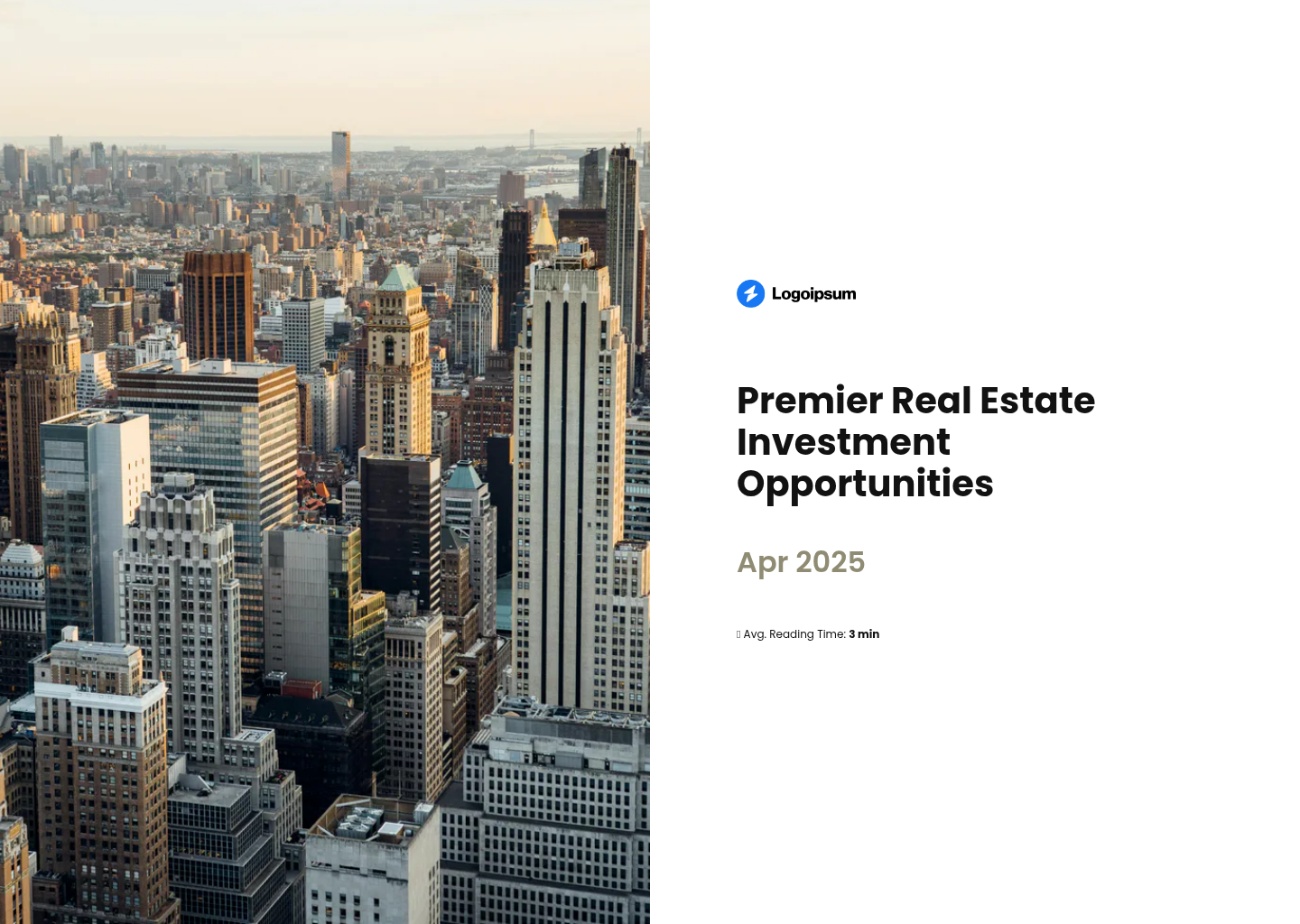
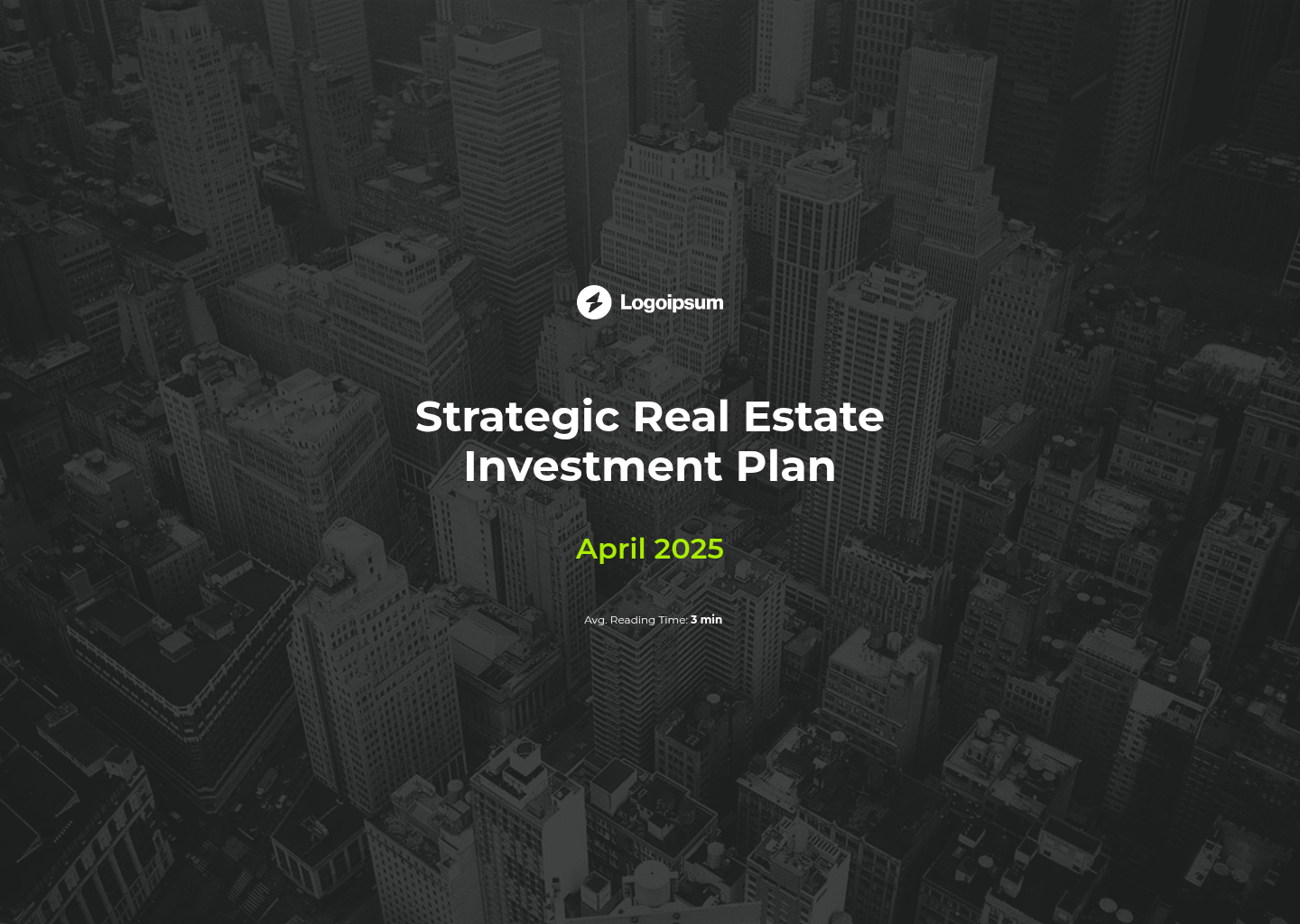
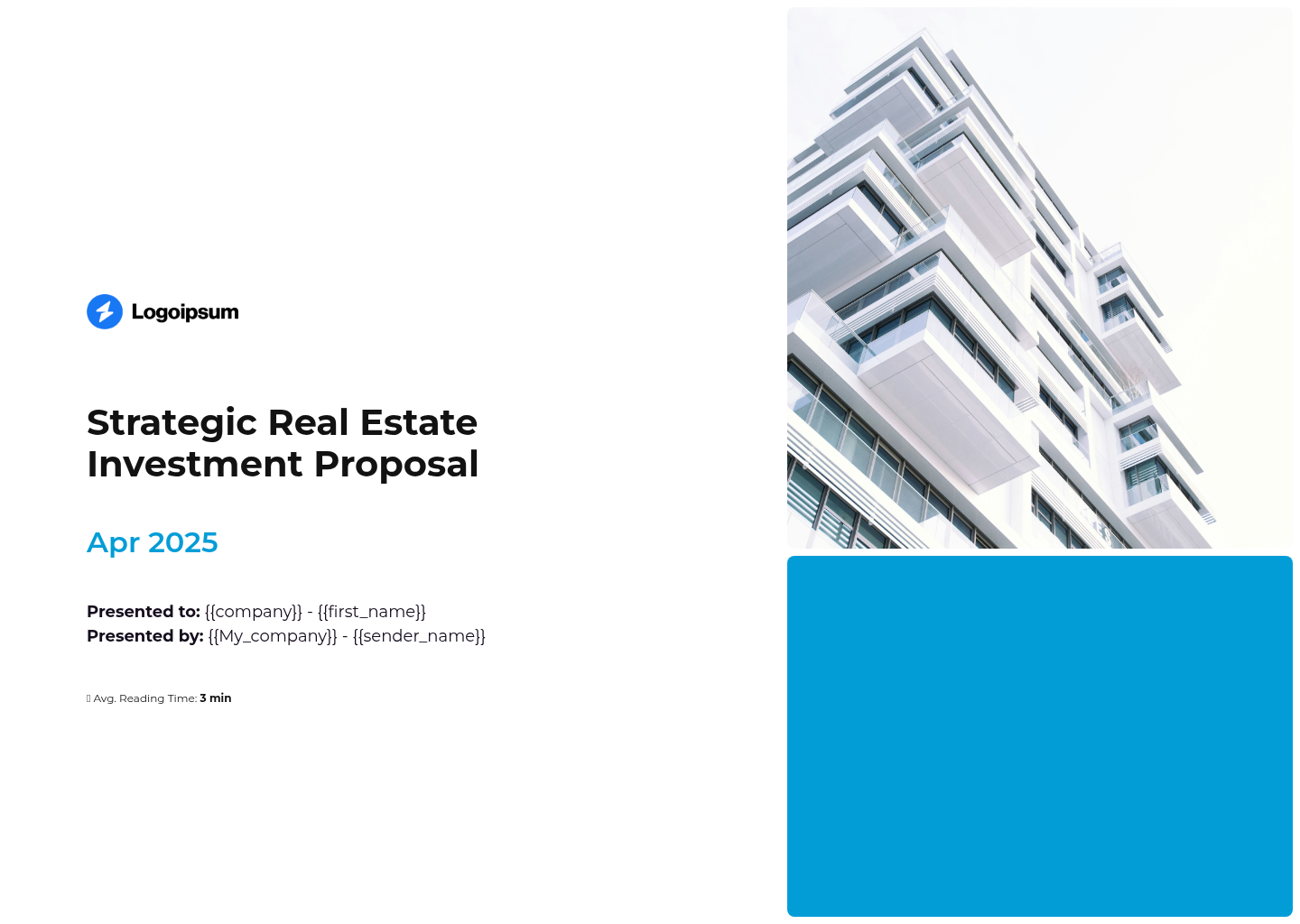
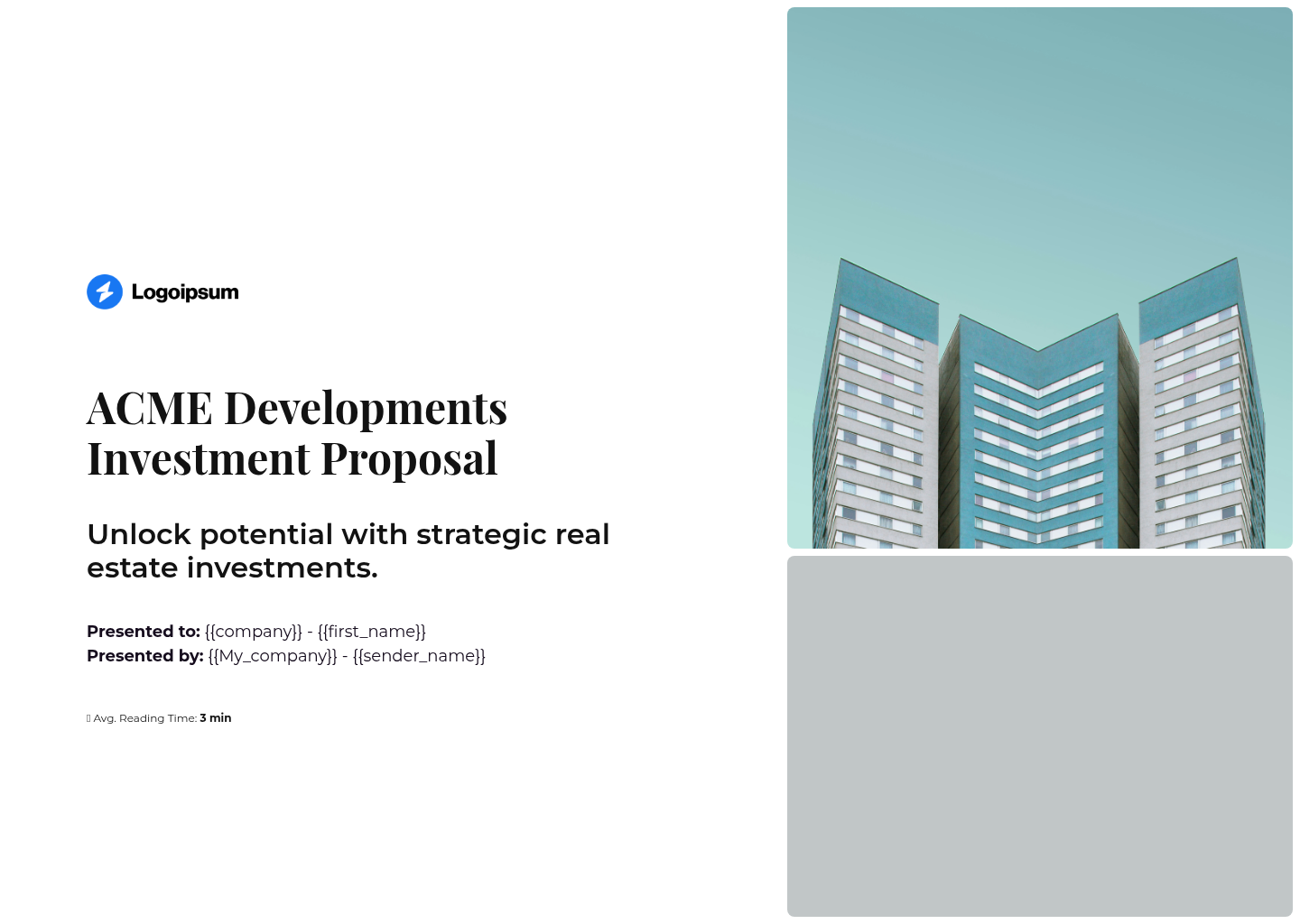
The cover slide of your real estate investment proposal is your first chance to impress.
Make sure it features your company logo or your potential investor’s logo and a clear, catchy title. Personalize it with tags like {{company}} to make it feel tailored just for them.
Adding a video to your cover can really make a difference, boosting interaction by up to 32%. And remember, if you nail the first 3 slides, there’s an 80% chance they’ll read through your whole deck.
So, it’s worth putting extra effort into these initial parts to grab and hold their attention.
2) Executive summary
A lot of the groundwork happens long before you start writing. You need to have a clear idea of your goals and do your homework on potential investors. Understanding their preferences, investment criteria, and risk tolerance is key.
This preparation shows in your executive summary.
Make it immediately clear that you’ve done your research. When an investor reads your proposal, they should feel like you understand them and that you’ve specifically chosen this opportunity for them.
It’s your opportunity to engage them and encourage them to read on. Show them right off the bat that this proposal is worth their time.

3) Market analysis
In the market analysis part of your real estate investment proposal, you’ll break down the market to show you really know the dynamics.
It’s key to cover the current scene and predict what’s coming. Look at supply and demand, scope out your competition, see if they use real estate software development services, and pinpoint both the big opportunities and any challenges.
- Start off by taking a close look at the market. Bring in data from industry reports, demographic details, and economic forecasts to support your points. This sets the stage by showing what the market looks like right now and where it’s heading.
- Next, size up the competition. Look at how similar properties are performing and how yours compares. This step highlights the potential of your project.
- Then, talk about your target tenants. Explain how choosing the right mix of tenants is designed to attract a diverse group of people who will keep coming back.
- Finish with why you chose this location. Use maps and traffic studies to show why this particular spot is ideal.
4) Property information
In the property information section, give investors a real sense of what makes your property stand out.
- Start with the basics—location, size, appearance, and those unique features that make it different from anything else out there.
- Then, talk about the previous owners, any improvements it’s seen, and any memorable moments that add a bit of character.
- Next, give a snapshot of its current condition, price, and what it could be worth in the future. Back that up with why this property makes sense for your goals, based on what the market’s telling you.
- If you’re thinking about making upgrades or renovations, be clear about what you’re planning. It’s key to show how these improvements will boost the property’s value, not just throw money at it. Make it obvious that these changes are smart moves that line up with what’s happening in the market.
5) Expected return on investment
When talking about the expected return on investment (ROI) for your real estate project, it’s crucial to keep things realistic to build investor confidence.
When mapping out this part, keep the 5% rule of real estate investing in mind.
It’s a handy benchmark that says you should aim for a total yearly return of 5% from rent and property value increases, measured against the property’s purchase price. It’s a straightforward target that helps you see how profitable your project could be.
Make sure to explain your calculations for ROI and cash flow using straightforward and conservative assumptions. Consider showing different scenarios—like best, worst, and most likely cases—to cover all bases.
6) Risk assessment
Saying there are no risks in construction or real estate would be unrealistic—investors will see right through that and start wondering what else you might be hiding.
But if you’re proactive, show that you understand the risks, and have a plan in place, you’re building trust.
- Think about the risks that could impact your investment. Maybe the market takes a downturn, dropping property values, or you get hit with higher-than-expected tenant turnover, messing with your cash flow.
- New regulations might also come into play, changing how properties need to be managed—remember how the infamous LA mansion tax threw the whole market out of whack?
- Next, explain how you’re going to handle these challenges. For example, diversifying your portfolio can help you ride out market swings. Building good relationships with tenants can keep turnover low. And staying on top of the latest regulations will make sure you stay compliant and avoid any legal headaches.

7) Financial options and legal details
In this slide, cover the financial options available for the investment and go over the legal aspects involved.
- Financial options: Start by listing the different ways investors can fund the project—this could be through personal savings, bank loans (e.g., use a VA loan calculator), or partnerships. Explain the pros and cons of each, like how loans have interest rates but partnerships might involve sharing profits. Mention any financial perks or tax benefits that could be available too.
- Legal details: Give a clear overview of the legal responsibilities linked to the investment. Touch on things like zoning laws, property regulations, and any compliance needs.
Here’s a slide you can repurpose to outline the financial and legal details:

You can also put it in a dedicated Terms and Conditions slide:

8) Exit strategy
It’s crucial to have a clear exit strategy in your real estate investment proposal. This part of the plan shows how you intend to wrap up your involvement with the property and make sure investors get their capital and profits back.
- Resale: One common approach is to sell the property. This strategy works well when you catch the market at the right time. Success depends on a good understanding of market trends, the property’s condition, and the purchase price.
- Refinancing: Another approach is refinancing, which lets investors cash out some of the property’s value while keeping ownership. This can be a smart move if you’re not ready to sell but need funds for other investments or improvements. It’s a strategy that fits well with a long-term hold, helping to stabilize cash flow and potentially increase the property’s value over time.
Make sure to clearly outline when and how you plan to sell or refinance, what you expect to gain from it, and what your backup plans are if things don’t go as planned.
This demonstrates that you’re thinking ahead and are ready for different scenarios, which can be reassuring for investors.

9) Supporting documents
This slide is all about the paperwork you’ll need for your real estate investment proposal. Including these shows transparency and gives investors the details they need to feel confident about getting on board.
- Financial statements: Show both the current and projected financials for the property. Include income statements, balance sheets, and cash flow forecasts to give a clear view of the property’s financial situation.
- Market analysis: Take a close look at the local real estate market. Highlight the key trends, use comps to compare similar properties, and share your predictions to show why this property is a smart investment.
- Legal documents: Include important legal papers like the title deeds, any zoning permissions, and compliance certificates. These show that the property is legally sound and set for development or sale.
- Property appraisal: A recent appraisal report is essential as it offers an independent valuation of the property, supporting your pricing and investment strategy.

10) Contact slide
A common mistake in many investment proposals is wrapping up with a simple thank you and closing off communication. To avoid this, the next steps slide should make it incredibly easy for investors to know what to do if they’re interested.
Spell out exactly what you’d like investors to do next. Maybe it’s to arrange a meeting, give you a call, or drop an email. Keep it simple and direct.
Put all your contact details front and center—your phone number, email, and even your LinkedIn profile. This way, investors won’t have to search for how to reach you.
Adding a link to your calendar for booking a meeting can be a game-changer. It makes setting up a discussion quick and hassle-free, showing you’re ready to talk more whenever they are.
Real estate investment proposal examples that persuade
Now that we’ve tackled what should go into your real estate investment proposal, it’s time to see what it looks like in practice.
All of the examples below have been built with these best practices in mind, inspired by what has worked for others in the past.
Plus, they’re completely replicable, allowing you to adapt any of these templates to craft your own presentation with ease.
Real estate investment prospectus
When I first opened this real estate investment proposal example, what immediately stood out to me was how simple it was to customize and make my own.
Changing the logo on the cover is a breeze—just pop in your website URL, and the editor does the rest. No more hunting for the right logo file or messing around with the background.
You can also add tags like {{company}} to customize the deck to each recipient.
I know for a fact that personalization is the single most important predictor of success. If you include a personal note in your deck, 68% more people are likely to read it in full.

Scroll to preview
Modern real estate investment proposal
For the next real estate investment proposal, I like how it gives potential investors exactly what they need without overwhelming them with too much data.
We all understand that investors are often pressed for time and might not dig through an entire deck. That’s where the data visualization really comes into its own.
It cleanly presents crucial market analysis and real-time updates, right alongside clear financial projections.
I’m also a big fan of the appendices slide. It’s super handy when you need to detail the math behind your figures or show photos of similar properties in the area.
It allows investors to easily access financial statements or legal documents related to the investment, all without feeling swamped.

Scroll to preview
Real estate construction investment proposal
What stands out to me is how actionable this proposal is. There’s a dedicated terms and conditions slide, so the deck can also act as a contract. If an investor is ready to commit, they can just sign off using the e-signature feature.
And if they want to talk more, there’s an embedded calendar to set up the next meeting without any hassle.
To take this deck to the next level, a 360-degree virtual tour would be fantastic, or maybe a slide dedicated just to photos and videos without any text.
Since investors often don’t have the time to visit each property early in discussions, this could be a brilliant way to capture their interest right off the bat.

Scroll to preview
Real estate investing business plan
The last real estate investment proposal stands out by taking a more approachable angle – it’s really about helping potential investors understand the investment process, get a feel for the market opportunities, and see what kind of returns they can expect.
It also includes interactive data visualizations that make the market analysis and financials easy to grasp, and they look great on any device.
One feature I especially like is the clickable timeline of testimonials – it’s a smart, engaging way to show what past investors have experienced.

Scroll to preview
Interactive real estate investment proposal templates
With investors often sifting through dozens of opportunities, especially when big money is on the line, your proposal needs to grab attention fast.
Interactive real estate investment proposal templates offer a ready-made structure that’s already proven effective. Simply input your data and adjust it to fit your project, and you’ll have a proposal that will give you the competitive edge you need.
Just grab one.

