


Writing a Software Proposal to Impress Clients (+Examples)
Learn to write software proposals that wow clients. Our guide offers tips on best format and structure, complete with examples and customizable templates.
Set as Preferred Source
With the global software market on a rocket ride, expected to hit a whopping USD 1,397.31 billion by 2030, the stakes have never been higher.
To carve out your slice of the pie, your sales game needs to be on point, starting with a rock-solid software proposal.
But here’s the snag: the market is crowded, and every proposal you send is up against stiff competition.
It’s not enough to list what you can do; you need to make potential clients see you as the only one who can solve their problems. And let’s be honest, a generic, one-size-fits-all proposal is about as exciting as last year’s tech news.
Stick around, and I’ll teach you how to write a software development proposal that stands out and seals the deal.
I’ll also give you a handpicked library of the best software proposal examples, instantly usable as templates, so you can create your next client magnet right away.
Let’s dive in!
What to include in a software development proposal?
Crafting a software development proposal that captures attention and wins contracts is about striking the perfect balance between providing enough detail to showcase your expertise and keeping it concise enough to maintain interest.
Here’s what you need to include to make your proposal stand out.
9 essential slides of a software development proposal:
- Introduction: Begin with an overview of your company and a brief understanding of the client’s problem you aim to solve. This sets the tone for a solution-focused proposal.
- Project overview: Summarize the project goals, highlighting how your services align with the client’s objectives.
- Scope of work: Detail the specific features and functionalities you plan to develop, outlining the project’s scope clearly.
- Methodology: Describe your approach to the project, including the development methodologies you will use, to give the client insight into your process.
- Timeline: Provide a project timeline, including milestones and deadlines, to establish clear expectations.
- Cost estimate: Offer a detailed cost breakdown, ensuring transparency and building trust with the client.
- Case studies/Examples: Include examples of past projects to demonstrate your experience and success in similar ventures.
- Testimonials: Add client testimonials to reinforce your credibility and highlight your track record of delivering satisfaction.
- Next steps: Conclude with a clear call to action, outlining what the client needs to do to move forward with your services.
What is the best software development proposal format?
Traditionally, software development proposals were often presented in static formats like PDFs or PowerPoint (PPT) slides.
These formats, filled with extensive text and occasional images, served as the standard for years, providing detailed information but lacking the ability to truly engage and captivate potential clients.
However, what worked in the past doesn’t quite hit the mark today. In a world where digital experiences are expected to be dynamic and immersive, sticking to static documents means missing out on the opportunity to truly connect with your audience.
The best format now involves creating an interactive experience. Imagine integrating playable videos directly within the proposal, embedding links for deeper exploration, and using dynamic visuals to clearly illustrate your proposed solutions.
This approach transforms the proposal from a simple document into an engaging, memorable experience.
Here’s a breakdown of the most popular formats:
Format | Pros | Cons |
|---|---|---|
– Great for text-heavy content | – Lacks interactive features, making it less engaging | |
PowerPoint (PPT) | – Combines text and visuals effectively | – Limited in terms of interactivity |
Word document | – Ideal for documents needing regular updates and collaborative input | – Falls short for visually driven or multimedia content |
Storydoc | – Excels in visual storytelling and engagement | – Might have a learning curve |
Software development proposal examples that win over clients
The best software proposals out there hit the sweet spot of being easy to understand while thoroughly explaining the project’s ins and outs, making sure to highlight how they can solve specific problems.
Plus, by weaving in interactive elements, these proposals turn reading into an experience, helping clients visualize exactly what they’re getting.
Next up, we’ll dive into some software development proposal examples that follow these principles. They’re your roadmap to creating documents that inform but also excite and build confidence in your ability to deliver.
Modern software development project proposal
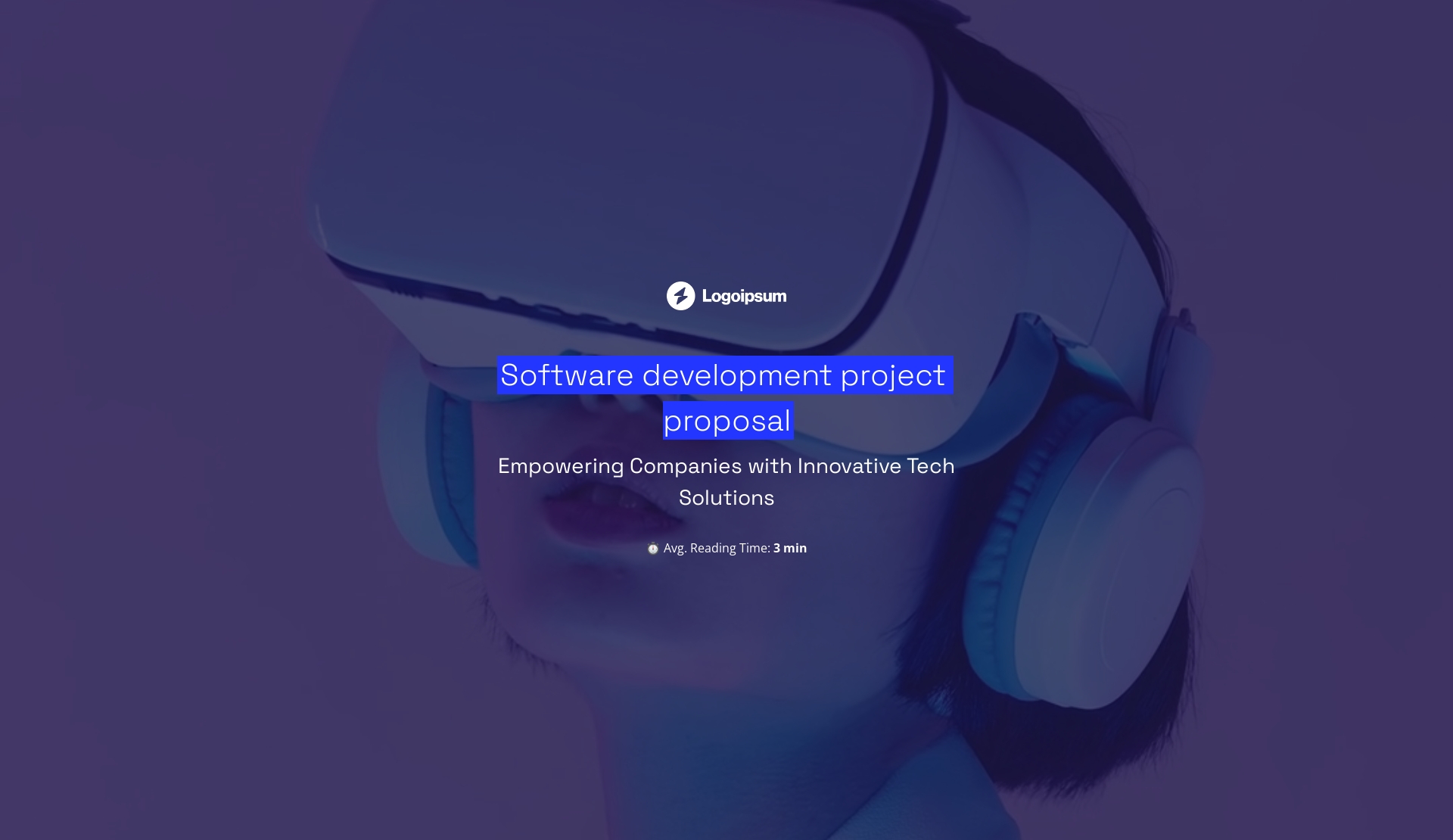
This software development project proposal presents an innovative approach to proposal creation, focusing on interactivity and visual engagement.
It stands out by effectively combining detailed project information with dynamic elements to captivate potential clients.

Scroll to preview
What makes this software proposal example great:
- Video on the cover slide: It immediately engages viewers with a compelling visual summary of the proposal, setting a dynamic tone from the start.
- Logo placeholders: The deck offers easy customization, allowing businesses to seamlessly integrate their or their past partners’ branding into the proposal.
- Multiple smart CTAs: It encourages action from potential clients, guiding them towards the next steps in a clear and interactive manner.
ERP software development proposal
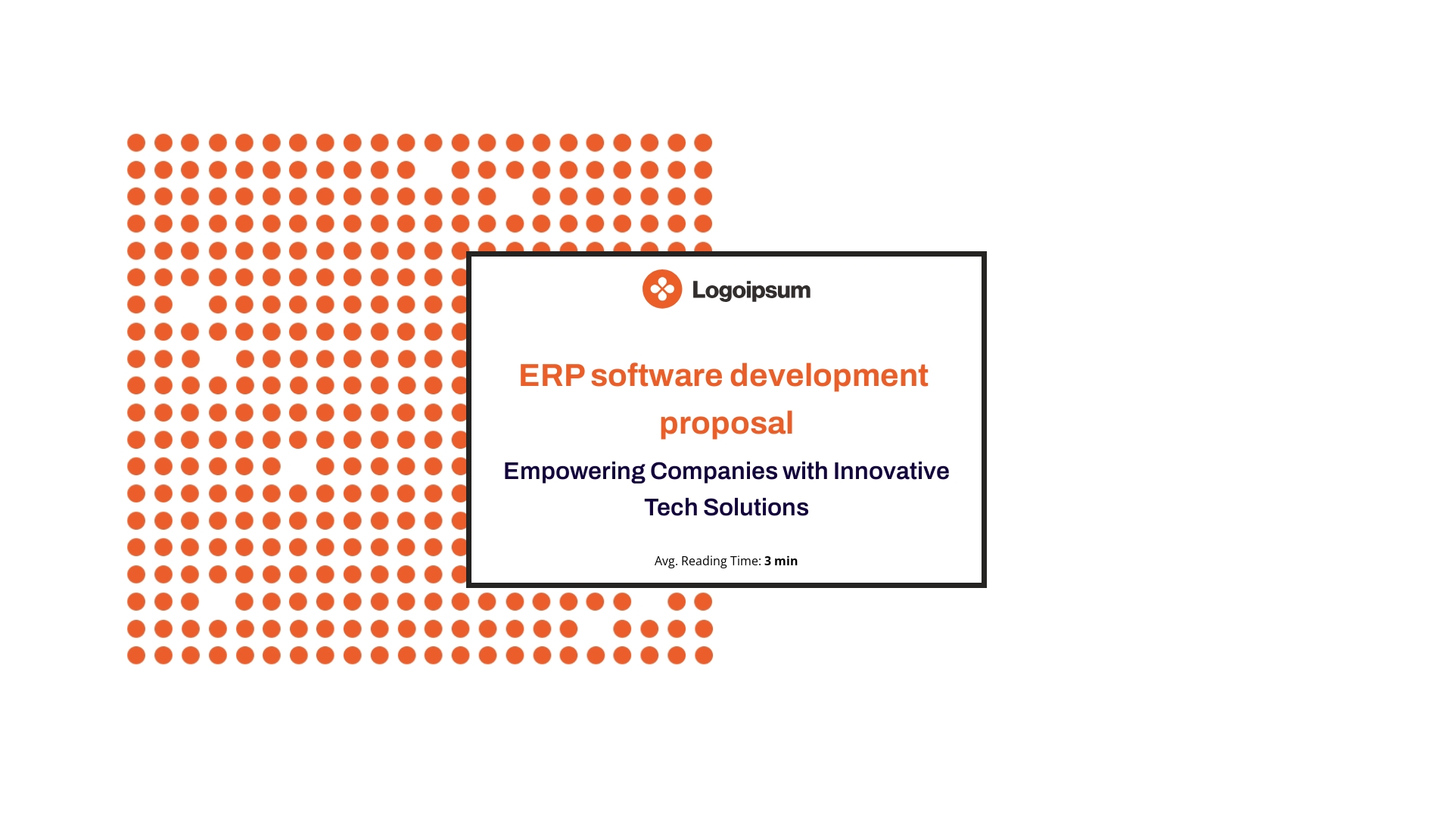
This software development proposal exemplifies a modern and efficient approach to proposal documentation. It’s designed with a focus on clarity and engagement, effectively communicating the project’s scope and benefits without overwhelming the reader.
Whether you’re tackling a complex ERP software development project or a more straightforward system implementation, this proposal format ensures that all essential details are conveyed with precision.
It can also outline post-deployment strategies such as a release advisory process to help teams evaluate updates, reduce implementation risks, and maintain system stability.

Scroll to preview
What makes this proposal for system development great:
- Clean design: The proposal’s layout is streamlined and visually appealing, ensuring that the focus remains on the essential information.
- Content segmented in tabs: Information on project details is organized into tabs, making it easy for readers to navigate through different sections without getting lost in a sea of text.
- Running numbers: Key metrics are highlighted with running numbers, providing a quick, at-a-glance understanding of the project’s impact and scope.
CRM software development proposal
By incorporating interactive features, this software development proposal not only conveys the necessary information but does so in a way that is visually appealing and user-friendly, significantly increasing its potential to win over clients.
It’s a prime example of how to effectively communicate a complex project in an engaging and accessible manner. It stands out for its strategic use of design and functionality to enhance the reader’s understanding and interest.

Scroll to preview
What makes this proposal for software development great:
- Use of grayed-out content: This technique focuses the reader’s attention on key areas, making the proposal easier to navigate and emphasizing important points.
- Responsive design: Making design responsive ensures that the proposal looks great and functions smoothly across different devices, enhancing the user experience.
- Timeline slide with custom icons: It offers a visually appealing and easy-to-understand overview of the project timeline, making the proposal more memorable and engaging.
Agile software development proposal
This software project proposal showcases a forward-thinking approach to proposal creation, emphasizing flexibility, interactivity, and client engagement. The deck is crafted to not only present the project details but also to actively involve the client in the process.

Scroll to preview
What makes this software proposal example great:
- Option to add external links: It allows for the inclusion of additional resources, giving clients a deeper dive into specific aspects of the proposal or showcasing related work.
- Option to add an accept button: It facilitates a smooth transition from proposal review to project initiation, making it easy for clients to move forward with the project.
- Access to an analytics panel: It provides valuable insights into how the proposal is being interacted with, helping to understand client engagement and interest levels.
Software development financial proposal
This software proposal leverages the latest in digital proposal technology to offer a highly personalized and interactive experience.
It stands out for its innovative features that not only enhance the presentation but also provide practical tools for engagement and customization.

Scroll to preview
What makes this software project proposal great:
- Ability to personalize at scale using dynamic variables: It offers a highly customized experience for each recipient, making the proposal more relevant and engaging.
- Option to extract branding from any website: It allows for quick customization of the proposal to match your company’s or the client’s branding, ensuring a consistent and professional appearance.
- Option to embed your calendar: It makes it easy for clients to schedule follow-up meetings or demos directly from the proposal, streamlining the engagement process and accelerating decision-making.
Application development proposal
Interactive features elevate this proposal from a simple document to a dynamic experience, showcasing the application development project in a vivid and engaging manner, and making a strong case for why the proposing team is the best choice for the project.

Scroll to preview
What makes this software development proposal great:
- Scroll-based design: It offers an intuitive and engaging way for readers to navigate through the proposal, improving the user experience with smooth transitions and animations.
- Option to embed and play videos directly from the deck: It allows for a richer presentation of the project or company capabilities, making the proposal more engaging and informative.
- Option to add dataviz components with real-time data: You can incorporate dynamic data visualization components, providing an up-to-date, compelling visual representation of relevant data or project metrics.
How to write a software development proposal?
Making a compelling software development proposal requires a blend of clarity, precision, and a deep understanding of your client’s needs.
Here’s how to create a proposal that stands out, speaks directly to your client’s pain points, and showcases your team as the go-to experts for their project.
1) Identify the client’s needs and project scope
Before diving into the technicalities, start with a solid foundation by identifying your client’s core needs and the project’s scope.
This step is crucial for aligning your proposal with the client’s expectations and demonstrating your understanding of their challenges.
Use this section to reflect on the client’s problem or opportunity, showing empathy and a deep grasp of their situation. It’s not just about the software; it’s about solving a problem or seizing an opportunity that matters to them.
2) Present your solution
Once you’ve laid the groundwork by identifying the needs and scope, it’s time to present your solution. This is where you get to shine by detailing how your software or service addresses the client’s specific challenges.
Highlight the unique features, technologies, and methodologies you’ll employ, and explain why your approach is the best fit.
From an electron development company showcasing real-time desktop app prototypes to cloud providers demonstrating scalability tests, showcase how your service is the right choice for them.
Remember, clarity is key. Break down complex solutions into digestible segments that decision-makers can easily understand and appreciate.
3) Outline the project timeline and milestones
A clear, realistic timeline is the backbone of any successful project. In this section, outline the major milestones, including the project’s start and end dates, and the key deliverables at each stage.
This not only demonstrates your project management skills but also sets clear expectations. Be sure to include any assumptions that your timeline is based on and be transparent about potential risks and how you plan to mitigate them.
4) Provide a detailed budget breakdown
Transparency in pricing builds trust. Provide a detailed budget breakdown that covers all costs associated with the project, including any potential variables that could affect the final price.
This section should reassure the client that there are no hidden fees and that you’ve thoughtfully considered the financial aspects of the project. If possible, offer different pricing options or packages to accommodate the client’s budget and needs.
Here’s a great video on how to price large software development projects:

5) Highlight your team’s expertise
Your team is your greatest asset. Highlight the qualifications, experience, and success stories of the team members who will be working on the project. This will help the potential client recognize your company as one of the top custom software development companies, capable of delivering exceptional results.
This reassures the client that their project is in capable hands. Include brief bios, relevant expertise, and any notable projects that demonstrate your team’s ability to deliver.
6) Include client testimonials and case studies
Nothing speaks louder than success. Include testimonials and case studies from previous clients, especially those with similar projects or challenges.
Companies that sell software development services need to have a running library of case studies so the right one can be pulled for each new proposal.
This section serves as social proof of your capabilities and success in delivering on your promises. It’s an opportunity to show potential clients that you’re not just capable of talking the talk but walking the walk.
7) End with a call to action
End your proposal with a clear call to action. Invite the client to take the next step, whether it’s a meeting, a call, or signing the proposal. Make it easy for them to move forward with you by providing all necessary contact information and any next steps they need to take.
Here’s a great example of a deck with an Accept button:
Interactive software development proposal templates
Starting from a blank slide can be quite challenging. It isn’t just about what to include, but how to structure it, how to make it engaging, and how to ensure it aligns with your client’s expectations.
Without a clear roadmap, it’s easy to get lost in the details or miss out on key elements that could make your proposal stand out.
Interactive software development proposal templates provide a well-structured framework that covers all the essential components of a compelling proposal.
They’re designed to help you focus on tailoring the content to your client’s needs rather than getting bogged down by the format or structure.
Just grab one.

