












What is a Pitch Deck & What Makes It Fundable (+Examples)
Learn about the definition of a pitch deck, what it includes, types of pitch decks. Get examples and templates to make a winning pitch deck.
Set as Preferred Source
Pitch deck and investor deck are terms sometimes used interchangeably. The term “pitch deck” in this context is used to describe a brief document containing basic information about your company and introducing your vision to someone with no prior knowledge of it.
The term “investor deck” is used to describe a more detailed deck with an in-depth analysis of your unique value proposition, market opportunity, and go-to-market strategy.
When in doubt, it can be beneficial to ask potential investors what they expect to see at any stage of the investment process.
The main 2 differences between a pitch deck and a sales deck are their purpose and audience. The purpose of a pitch deck is to convince potential investors that your company is worth funding by promising them the desired return on their investment (ROI).
The purpose of a sales deck is to get prospects to become paying customers of your company by presenting how it’s going to change their lives for the better.
If you want to expand your knowledge you can read our posts on how to create a sales deck that makes you irresistible to buyers, or check out some Unique Sales Deck Examples that Outsell the Rest.
A pitch deck is a document used to gain investor buy-in during a funding round, whereas a marketing deck is an umbrella term that can mean a host of different things depending on the context it’s used:
- A marketing pitch deck is a presentation shown externally to potential investors by founders of marketing agencies in the hopes of getting the necessary funding.
- A marketing sales deck is a presentation shown externally to prospective clients of marketing agencies in order to educate them about your offering and close deals.
- An internal marketing deck can be shown internally to the general managers and business owners, or to stakeholders to demonstrate a company’s marketing or advertising efforts and present key metrics.
What does a pitch deck include?
Some investors can be very particular about the pitch deck structure that they expect to see. Whenever possible, you should clarify the outline with potential investors and build your pitch deck accordingly.
That said, there are still some basic slides that are to be expected by most investors and VCs.
10 basic slides 99% of investors will require from you:
- Introduction
- The problem
- Your solution
- Market size and opportunity
- Business and revenue model
- Traction and validation
- Marketing strategy
- Team (authority, experience, and skills)
- Financials
- Investment and use of funds
For more information on this go read our post on the nitty gritty details of what to include in a pitch deck.
Here’s our recommended pitch deck storyline:

What does a pitch deck look like?
A pitch deck typically looks like a well-designed branded slide deck in PowerPoint that includes about 10-20 slides with bullet points and visuals depicting the startup’s target audience, product demos, and data visualization.
The truth is, most pitch decks look very similar which makes it hard to stand out.
That’s why innovative startups are transitioning to interactive pitch decks that enhance your ability to show rather than tell, and give investors a more engaging content experience.
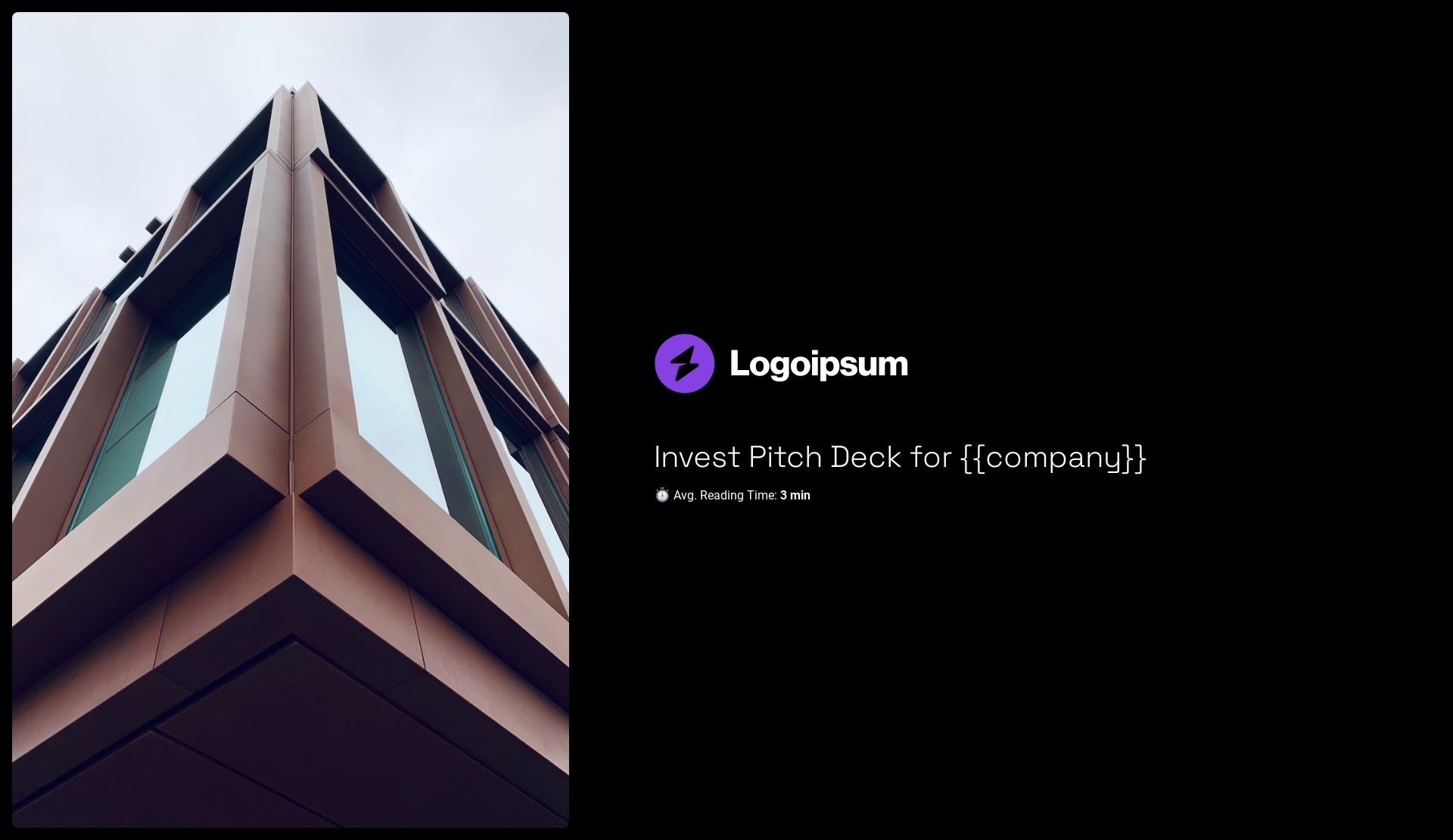
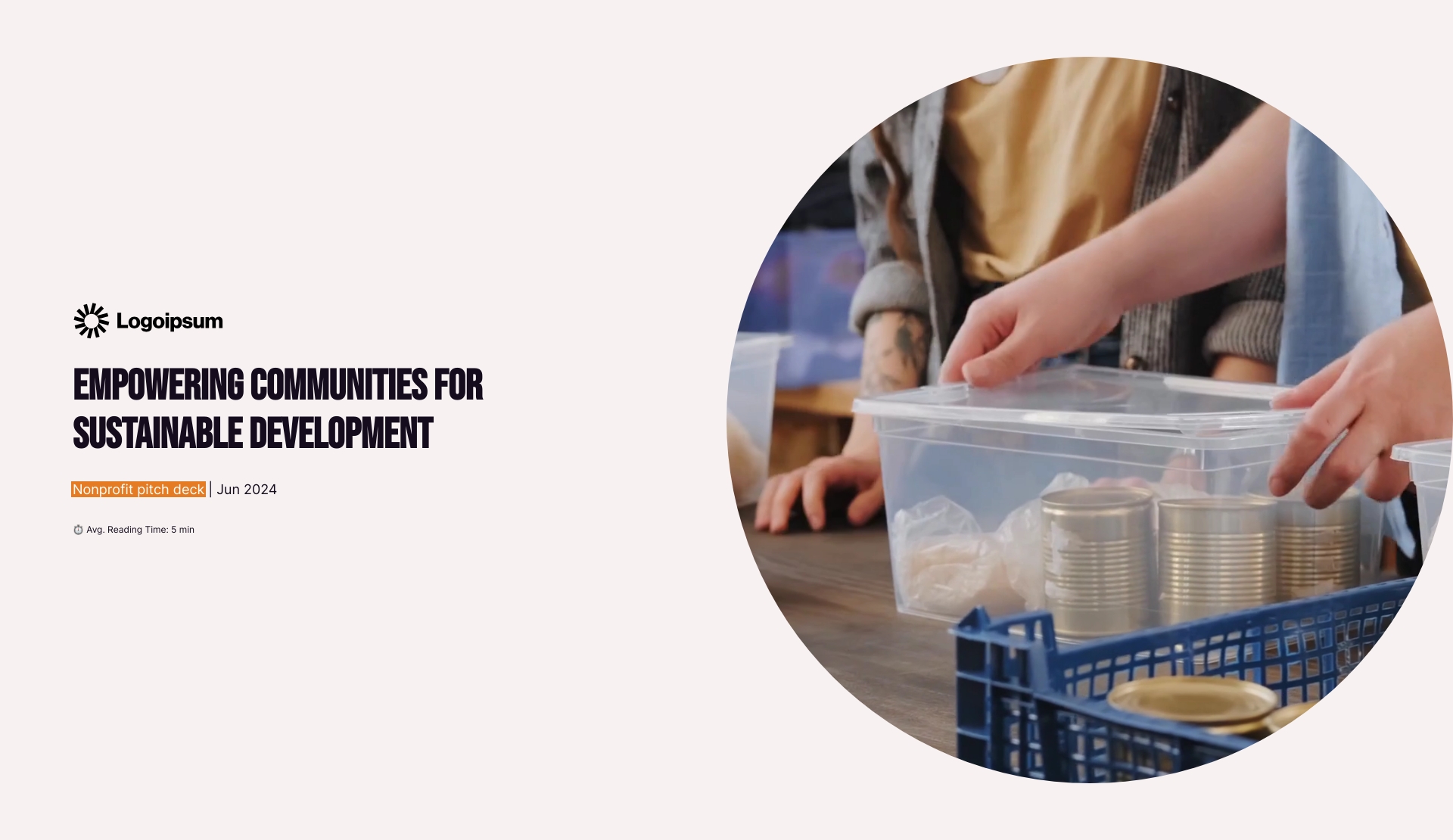
Here’s an example of what a modern interactive investor deck looks like:

Scroll to preview
What is the purpose of using a pitch deck?
The main purpose of a pitch deck is to pique the interest of potential investors. The main challenge of a pitch deck is NOT getting investor buy-in, but rather avoiding being disqualified right then and there.
It’s a common mistake to think that a pitch deck is supposed to persuade investors to invest in your startup, project, or business idea, but in reality that’s still a ways away. You have to be considered for evaluation first.
Every investor or VC has their own investment criteria, and since investors are drowned by people asking for their money they are looking to disqualify you based on those criteria.
In the words of Gordon Miller, an entrepreneur and investor, “Investors aren’t looking to say “Yes”, they are looking to say “No.””
Where can I see examples of pitch decks?
You can find the best pitch deck examples in this post with all the pitch deck examples worth taking inspiration from. The best part is that you can simply take any example on the page and use it as a template for your own pitch deck.
Where can I find pitch deck templates?
If you have itchy hands and can’t wait to start creating your pitch deck, I highly advise that you visit Storydoc’s pitch deck templates gallery.
These templates go way beyond looking pretty—they have been optimized for engaging investors regardless of whether they view your deck on desktop or their phone in-between meetings.
Just pick a templates from the gallery below.
What makes a good pitch deck?
A good pitch deck, in the eyes of investors, gets straight to the point (go here to see some of the best pitch decks ever).
Be clear and upfront about what you bring to the table and why your investors should care.
You should back up any claims you make with hard data and wrap it all up in a captivating narrative.
An effective pitch deck should showcase deep knowledge of your industry and market, but deliver it in simple terms that any person with only basic knowledge of your industry will understand.
Michael Wolfe, a startup founder, entrepreneur, and investor says any good pitch deck should have a straightforward format to it. He says:
“The best pitch decks portray:
- This is what we are doing.
- This is how we are going to do it.
- We can do it better if we get some money in.
- This thing is going to happen with or without you.
- Are you in or are you out?”
– Michael Wolfe, a startup founder, entrepreneur, and investor.
What makes a bad pitch deck?
A bad pitch deck is simply a pitch deck that gets rejected. It’s an unfortunate truth that 99% of pitch decks are therefore bad. The main reason for failure is failing to stand out, but other reasons can be unattractive design, confusing messaging, or being irrelevant to a particular investment program.
Reasons pitch decks fail:
- The pitch deck HAS a beautiful design but it looks like all the rest.
- It is filled to the brim with text.
- It does not have original graphics supporting your text.
- The pitch deck content goes too deep into technical stuff that investors don’t care about.
- The pitch deck messaging is too long, convoluted, complex, inconsistent, misleading, fantastical, antagonistic, overly emotional, or reveals ignorance.
- The deck is irrelevant to the target investors or not made according to their specifications.
- The deck does not tell a compelling and exciting story.
Who needs a pitch deck?
Pitch decks are used by startup founders or entrepreneurs to seek funding for their business ventures by showing high growth potential and a strategy for scaling their business (fast).
Who does NOT need a pitch deck?
1) You do not need a pitch deck if you don’t yet have any of the following planned out in detail:
- A business model
- Market analysis
- Competitive analysis
- Costs of building your business
- A growth plan
- A GTM (go-to-market) strategy
If you don’t have all of the above then no investor will take you, so don’t bother.
2) You don’t need a pitch deck if your business is too specific so that you have to hand-pick a handful of very particular investors. In that case, you should talk to them and prepare a document tailored to their specification.
3) You don’t need a pitch deck if you can fund your business on your own, whether through your own capital or because your business is already generating revenue (any money you take from investors will dilute your holdings in your company).
4) If you’re looking to close business deals and acquire new clients. Then you need a sales pitch deck or a product pitch deck, not to be confused with a pitch deck for investors.
What types of pitch decks are there?
- Intro pitch deck: This is the initial investor deck you send to grab the interest of potential investors and secure a meeting.
- First meeting pitch deck: This is a detailed presentation for your first face-to-face with investors.
- Post-meeting pitch deck: This company overview deck includes in brief the main points covered in the meeting with investors with a focus on the interests and concerns investors voiced in the meeting.
- Subsequent meeting pitch decks: As discussions progress, your deck might need to evolve to address deeper questions and provide more detailed data. These pitch decks may include decks like Market research, Product roadmap, Marketing plan, Sales plan, and others.
You should know – there are many pitch deck types for different industries and use cases. You can find everything we have below.
Pitch deck type
Seed pitch deck VS Series A/B/C pitch deck
The seed pitch deck is the deck you present to investors when you’re looking to secure your first-ever round of funding.
A seed pitch deck is typically short and focused on presenting your business’s grand vision and big idea. It attempts to answer “why an investor should be interested in what you have to offer?”.
A Series A/B/C pitch deck needs to be more financially heavy than a seed pitch deck since at this point you have been running your business for over a year.
A series pitch deck should include your current financial results and proof of traction, and conclude with ambitious yet realistic financial projections and milestones.
If in doubt, you can always reach out to a startup coach to help guide you through the process.
Static vs. interactive pitch deck
The main difference between static and interactive decks is that static decks follow the traditional format of text-based slides accompanied by images, while interactive decks enable you to create engaging multimedia content.
Another difference is that you can only insert old-school links or image links in static decks, whereas interactive decks allow you to embed lead-gen tools, including calendars, to get readers to book that next meeting straight from the deck.
Airbnb’s static deck vs an interactive remake of the same deck:
Static Airbnb pitch deck

Interactive Storydoc remake
Can I design a pitch deck myself or do I need to hire a professional?
You can absolutely design a pitch deck yourself using pitch deck designer tool like Storydoc on the market. If you already have a designer in-house, you can also get them to design your pitch deck.
If, however, there’s even the slightest chance your pitch deck could end up looking like it was created for a high school project, you may be better off letting a professional handle it.
When investors see a poorly designed deck, they’re already predisposed to disliking your entire presentation. Your chances of shaking that bad first impression are close to none.
What is the best software for creating a pitch deck?
There are 3 different types of tools available on the market for creating a pitch deck:
1) Legacy tools
Such as PowerPoint or Google Slides, that allow you to create traditional slideshow presentations. They have limited integration and customization options, and typically follow pre-designed patterns.
2) Mid-way tools
Such as Pitch, Canva, and Visme, which come with a wide variety of templates to choose from and customize.
These are more aesthetically pleasing than your average PPT, but don’t offer anything truly new in terms of features.
3) Dedicated pitch deck creators
Such as Storydoc, that provide next-gen interactive templates optimized for engagement, conversions, and performance.
They let you design on autopilot, as well as customize and personalize your decks at scale. You can also include smart CTAs to get investors to book that next meeting straight away.
For more information, check out our ultimate list of the best presentation software.
How much does it cost to make a pitch deck?
Creating a pitch deck on your own depends on the tool or set of tools you use to create it:
- Google Slides is free
- PowerPoint is free with a Microsoft Office license
- Canva Pro subscription costs $12.99 per month; the Basic version is free.
- Pitch.com subscription costs $8 per member per month when billed annually, the Starter plan is free.
- Storydoc subscription costs $40 per seat per month
You may also need design tools like Adobe Photoshop or Figma, which also come at a price.
Hiring a professional designer to create your pitch deck would cost around $100 per hour. The number of hours depends on your needs and the number of iterations you’ll require, but could take anywhere from 3-8 hours.

