
























What Is a Sales Presentation & How to Nail It (+ Templates)
Learn what is a sales deck, what makes a good sales presentation, what should a sales deck include, and how to easily create an outstanding deck design.
Set as Preferred Source
What Is a Presentation in the Sales Process?
In the sales process, a presentation is a formal communication method where a sales representative shares information about a product or service with prospective clients.
The goal is to persuade and educate the audience, guiding them toward making a purchase decision. It often includes slides, visuals, and interactive elements to engage and inform the audience.
What Makes a Good Sales Presentation?
A good sales presentation is concise, engaging, and tailored to the audience’s needs. Key actions include storytelling, using persuasive visuals, and rehearsing for smooth delivery.
Top contributors to success are understanding the audience, a strong value proposition, and a compelling next step.
4 Main Types of Sales Decks
Let’s delve into the different types of sales decks you might need, depending on the situation and the audience.
1) Introductory Sales Deck
This is your elevator pitch in slide format. It’s like the trailer for a blockbuster movie—short, impactful, and leaves the audience wanting more.
- Keep it brief but impactful.
- Highlight what sets your company apart.
2) Product Sales Presentation
A product sales presentation is a structured pitch that showcases the features, benefits, and value proposition of a product to prospective clients.
- Use storytelling to connect emotionally with the audience.
- Incorporate data and testimonials to build credibility.
3) Technical Sales Deck
Imagine you’re a coach explaining the intricate plays of a football game. A technical deck dives deep into the specifications, features, and technical aspects of your product or service.
- Use layman’s terms to explain complex technical jargon.
- Include visuals like diagrams or flowcharts.
4) Proposal Deck
This is your tailored suit of sales decks. It’s customized to fit the specific needs and questions of a particular client, just like a bespoke suit would fit you perfectly.
- Address the client’s specific pain points.
- Include a timeline and actionable steps.
What Should a Sales Deck Include?
What are the must-have slides that should be in your sales deck? Let’s break it down.
1) Cover Slide
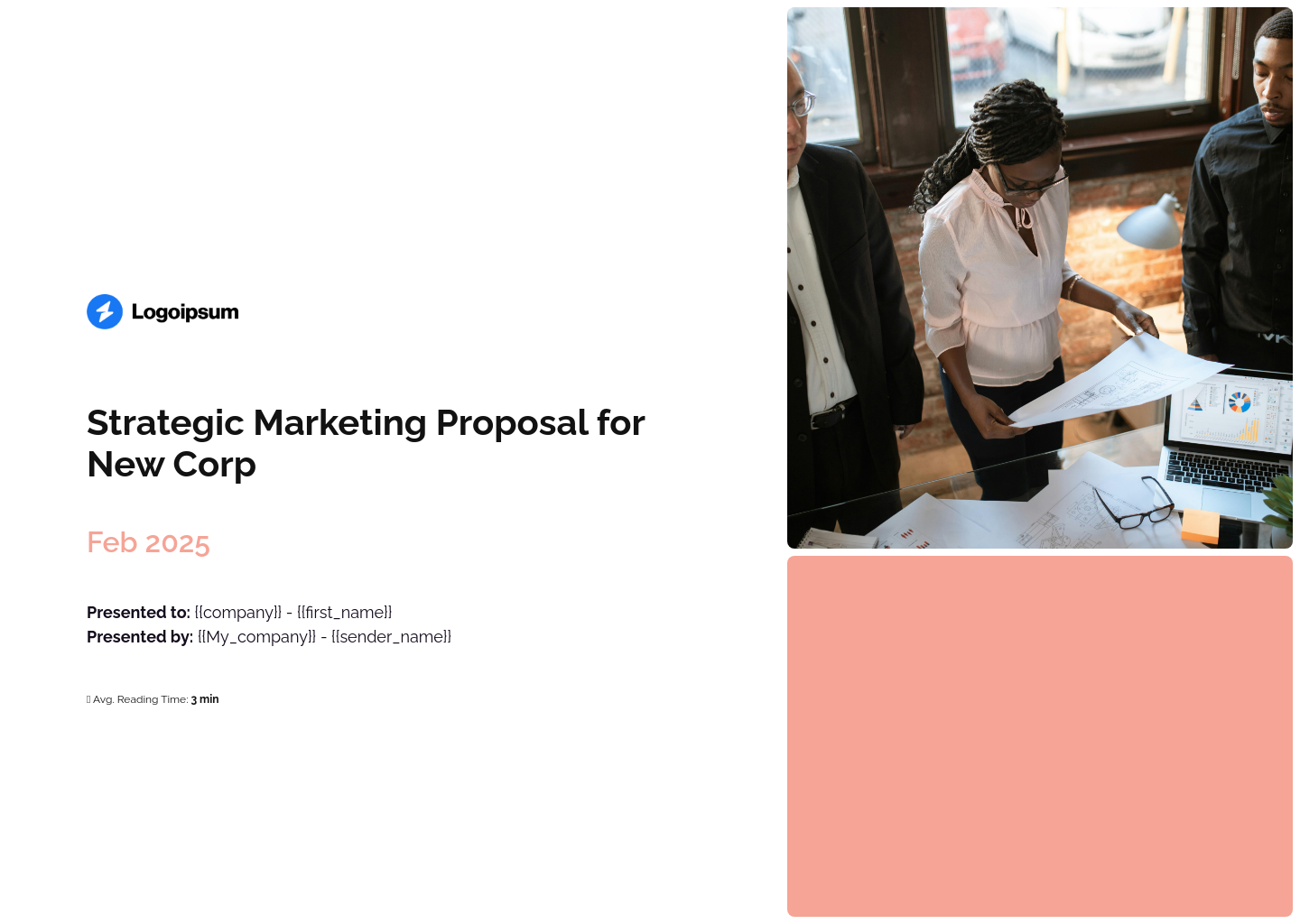
Your cover slide should be like the opening scene of a James Bond movie—captivating and memorable. Include your company name, logo, and a compelling image or tagline.
- Use high-quality images or graphics.
- Keep it clean and uncluttered.
- Use animation or video as a hook to grab attention.
2) Agenda
An agenda sets the stage for what’s to come. It’s like a table of contents for a book, guiding the reader through the chapters.
- List the key sections of your presentation.
- Keep it brief and straightforward.
3) Problem Statement
Here, you’re the detective pointing out the unsolved mystery. Identify the problem that your product or service aims to solve.
- Use real-world examples to illustrate the problem.
- Make it relatable to the audience.
4) Solution Overview
Now, you’re the superhero swooping in to save the day. Present your product or service as the ultimate solution to the problem you’ve just outlined.
- Use before-and-after scenarios to showcase your solution.
- Keep it focused and concise.
5) Features and Benefits
This is where you show off your product’s superpowers. Detail the features and how they translate into benefits for the user.
- Use bullet points for easy scanning.
- Include visuals like icons or images to represent each feature.
6) Social Proof
Social proof acts like a trusted friend who vouches for you. Include testimonials, case studies, or statistics that provide credibility.
- Use real quotes from satisfied customers.
- Include measurable results, like percentages or figures.
7) Pricing and Packages
Pricing can be the elephant in the room. Address it head-on, like a skilled negotiator laying all the cards on the table.
- Offer multiple pricing options if possible.
- Be transparent about what each package includes.
8) Next steps
Your next steps slide should include a CTA with your final push, like a coach’s pep talk before the big game. Make it clear what you want the prospect to do next.
- Use action verbs like “Sign Up,” “Buy Now,” or “Learn More.”
- Make the CTA stand out visually.
- Personalize your CTA.
- Embed your calendar app in the final slide to make it easy for prospects to book a meeting.
6 questions any effective sales deck must answer
Let’s talk about the basic questions you’ll have to answer in your sales deck to turn a prospect into a client.
- Why should a buyer ditch the status quo and change to your product or service?
- Why should they embrace this change now rather than later?
- Why should a potential customer choose your industry solution over those outside of your industry?
- Why should they choose you and your company specifically?
- Why should a potential buyer choose your product and service? What distinct value do you offer them?
- Why should they give you their hard-earned money?
According to David Hoffeld, these 6 main questions are at the root of all sales objections. By addressing them in your sales deck, you can guide your prospects through the buying process and get them to convert.
Now the challenge remaining is to weave the answers to these questions into a coherent narrative using the slide structure we talked about in the previous section.
Pro Sales Deck Advanced Techniques
Let’s dive into some advanced techniques that can make your sales deck go from good to great.
Storytelling Techniques
Storytelling is like the plot twist in a thriller movie—it keeps the audience engaged and invested in the outcome. Use a narrative arc to make your presentation more engaging.
- Use a real-life story to illustrate your points.
- Keep the story relevant to the message you’re conveying.
- Use the problem-solution approach to guide your narrative.
Psychological Triggers
Psychological triggers are the Jedi mind tricks of sales. Utilize principles like scarcity, social proof, and reciprocity to persuade your audience.
- Use phrases like “Limited Offer” to create urgency.
- Showcase endorsements from industry experts for added credibility.
Interactive Content
Interactive elements are like Easter eggs in a video game—they make the experience more engaging and enjoyable. Incorporate clickable links, videos, or interactive demos to make your deck more dynamic.
Interactive content increases engagement, memorability, prospect involvement, and supports the buyer’s decision-making.
- Use clickable buttons for your CTA.
- Embed short videos that explain complex concepts.
Below is a side-by-side example of 2 sales decks, one static and one interactive. Which would you rather read?
Static PDF or PPT
Interactive Storydoc
Data Visualization
Data visualization is like a sports scoreboard—it provides a quick and easy way to understand the game’s status. Use graphs, charts, and other visual aids to represent data effectively.
- Use pie charts for percentages.
- Use line graphs to show trends over time.
Objection Handling
Objection handling is like a skilled martial artist who anticipates the opponent’s moves and counters them. Address common objections within your deck to preempt any concerns.
- List common objections and provide counter-arguments.
- Use data or testimonials to back up your counter-arguments.
Sales Deck Design Basics
Design is more than just pretty slides. It’s about creating a visual experience that complements your message.
Consistency
Consistency is like the rhythm in a song—it makes everything flow smoothly. Maintain a consistent design theme, font, and color scheme throughout your deck.
- Choose a color scheme that aligns with your brand.
- Use no more than two types of fonts.
Simplicity
Simplicity is like a minimalist painting—it says a lot without cluttering the canvas. Keep your slides uncluttered and focused on one idea per slide.
- Use white space effectively.
- Limit the amount of text on each slide.
Visual Hierarchy
Visual hierarchy is like the pecking order in a wolf pack—it shows who’s in charge. Use design elements to guide the viewer’s eye to the most important parts of your slide.
- Use larger fonts for headings.
- Use color to highlight key points.
Interactivity
Interactivity is like a choose-your-own-adventure book—it engages the reader and makes them a part of the story. Add interactive elements like clickable buttons or live polls to
High-performance Sales Deck Templates to Get You Started
These sales deck templates are designed for the modern sales professional. They go beyond static PowerPoint slides by offering interactive, AI-generated decks that engage and charm buyers.
These templates come with built-in user data reporting and insights. They allows automation and personalization at scale, and are proven to increase win rates by 70% and speed up closing times by 30%
Grab one!

